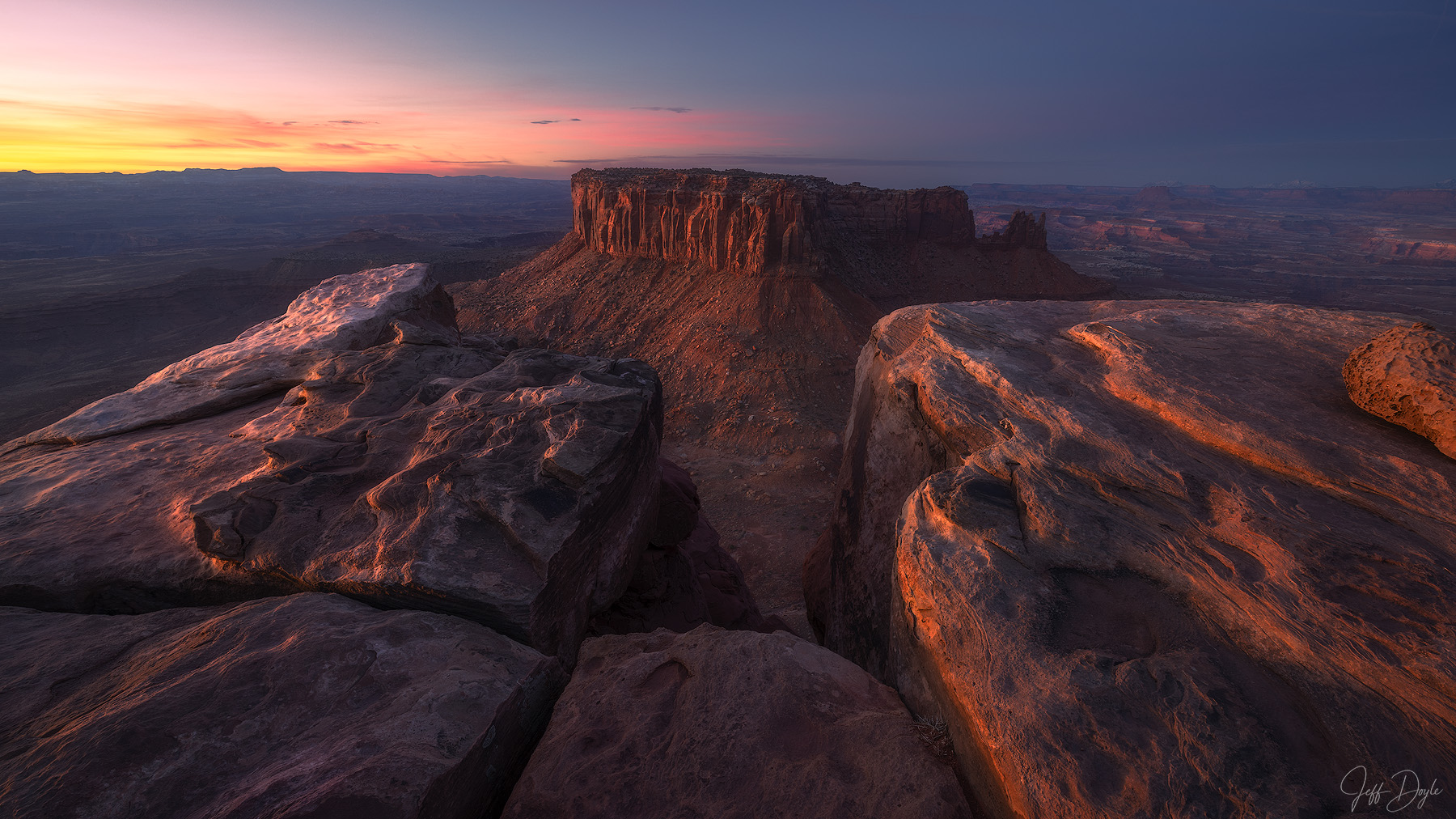
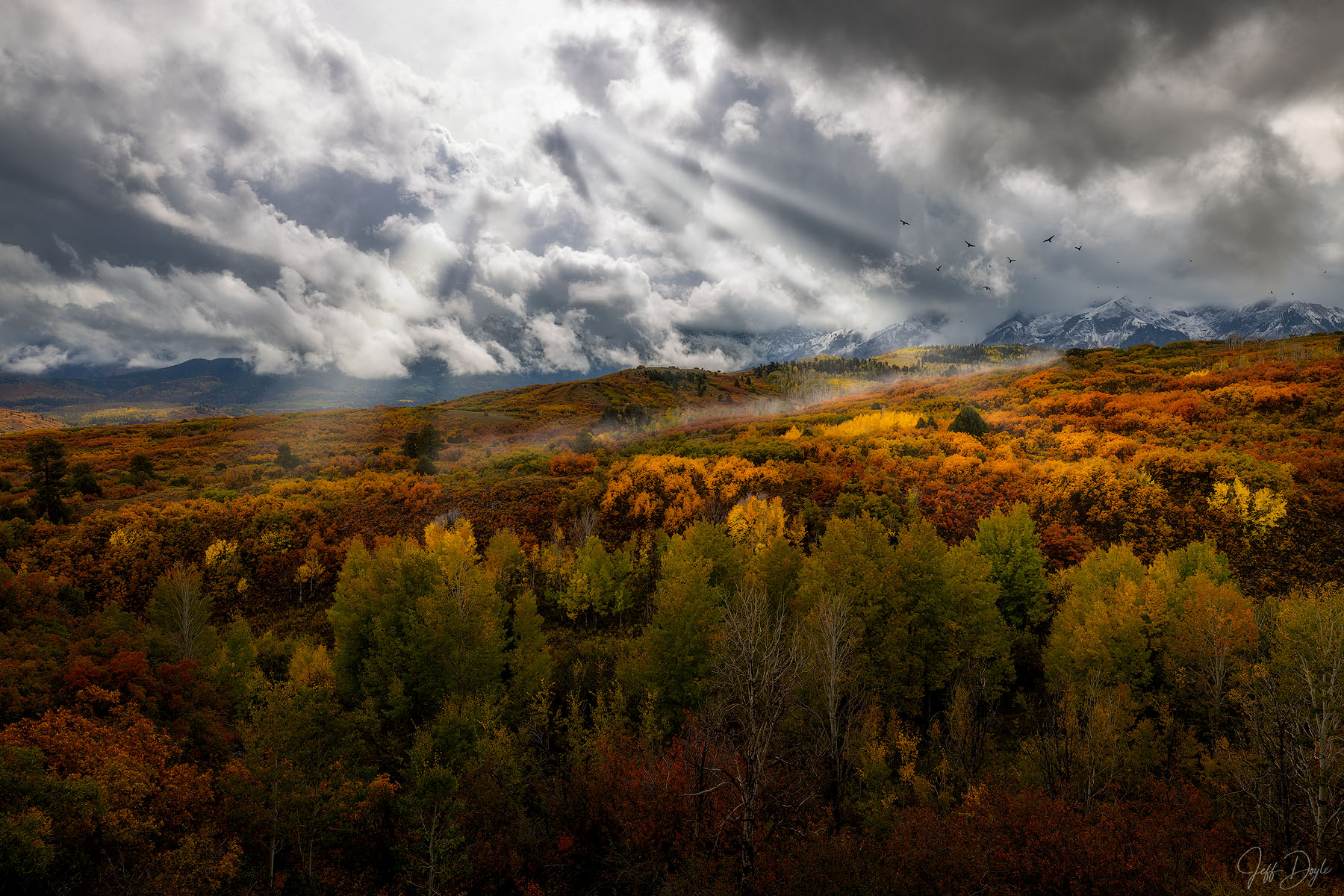
The History of Landscape Photography: How Art Shaped the Way We See
The history of landscape photography begins long before the invention of the camera. Painters were already trying to answer many of the same questions photographers face today: how to show a three-dimensional subject on a flat surface, how to convey scale, how to guide the eye through an image, and how to translate the experience of being in a place into something that can live on a wall. Landscape photography inherited many of those visual traditions, even as the camera eventually developed a language of its own.
When you look at a landscape photograph, you’re rarely seeing it in isolation. Most of us have spent a lifetime absorbing images of nature when we see paintings in museums, illustrations in books, photographs in magazines, posters, postcards, calendars, and screens. All of that quietly trains the eye. It’s why some compositions feel immediately comfortable, why certain kinds of light read as dramatic or peaceful, and why a wide view with a strong horizon can feel calming before you’ve consciously decided what you’re looking at. Art history sits behind those instincts. This relationship between art history and landscape photography continues to shape how images are composed, interpreted, and displayed today.
Landscape as a Subject, Not a Backdrop
For much of Western art history, landscape was secondary. Nature functioned as a supporting player behind religious, mythological, or historical subjects. It was only during the Renaissance and into the seventeenth century that artists began to treat the land itself as worthy of sustained attention.
This shift is explored in depth by Kenneth Clark in his book Landscape into Art. Clark traces the rise of landscape painting alongside a changing relationship between people and the land. As Europeans mapped territory, cultivated it, traveled through it, and felt increasingly less threatened by it, nature became something that could be observed, ordered, and appreciated aesthetically rather than feared.
That idea is echoed from a different angle by Simon Schama in Landscape and Memory. Schama argues that landscapes are never neutral. They’re shaped by memory, power, mythology, and culture. What we think of as “natural beauty” is often a reflection of what a society values, remembers, or wants to preserve.
Together, these ideas help explain why landscape imagery carries such emotional weight. We’re not just responding to geography, we’re responding to centuries of meaning layered on top of it.
Classical Composition in Landscape Photography
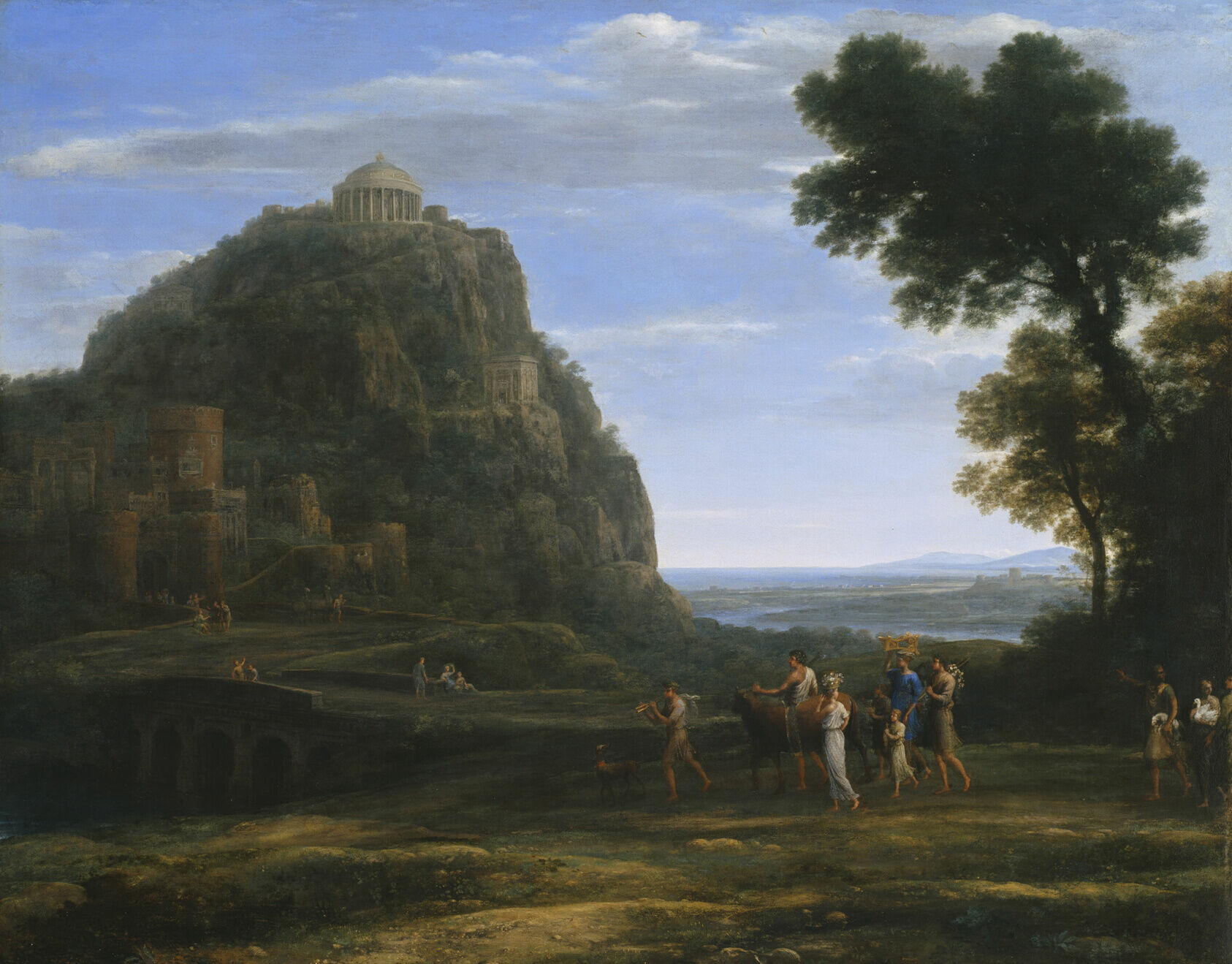
If you’ve ever noticed how many landscape photographs rely on a strong foreground leading into distance, that instinct didn’t come from the camera. It can be traced back to seventeenth-century painters such as Claude Lorrain and Nicolas Poussin.
Their landscapes were carefully constructed into a foreground, middle ground, and background arranged architecturally, giving the viewer a clear path through the image. That structure still underpins a huge amount of landscape photography today: the rock, flower, or shoreline that anchors the frame; the river, trail, or valley that pulls the eye inward; and the mountain or sky that resolves the scene. This same structure often carries through into how artwork is selected and displayed in real spaces.
They also used techniques that still define landscape photography today including tonal contrast, atmospheric perspective, and layered depth.
I spent three seasons returning to a stretch of the Olympic coast before I understood why my compositions kept failing me. I was reaching for the Lorrain structure with a dark foreground rock, surf pulling the eye back, and bright horizon resolving the frame, but the landscape wasn’t asking for that. It was flatter and more lateral. The moment I stopped trying to lead the eye and let it wander across the frame, the images finally started working. You don’t catch that pattern without knowing what you’re unconsciously reaching for.
At the same time, painters in the Dutch Golden Age embraced a more grounded approach. Their landscapes were secular, observational, and often tied to national identity. Farmland, canals, weather, and working land became worthy subjects, particularly as a growing middle class sought art that reflected everyday life rather than grand myth. This tradition helped normalize the idea that landscape imagery was something ordinary people could live with and not just something reserved for palaces and churches.
How Romanticism Influenced Landscape Photography
Many of our modern emotional responses to landscape imagery come directly from Romanticism. Beginning in the late eighteenth century, Romantic artists focused less on accuracy and more on experience. Nature became a way to explore awe, solitude, vulnerability, and the sublime.
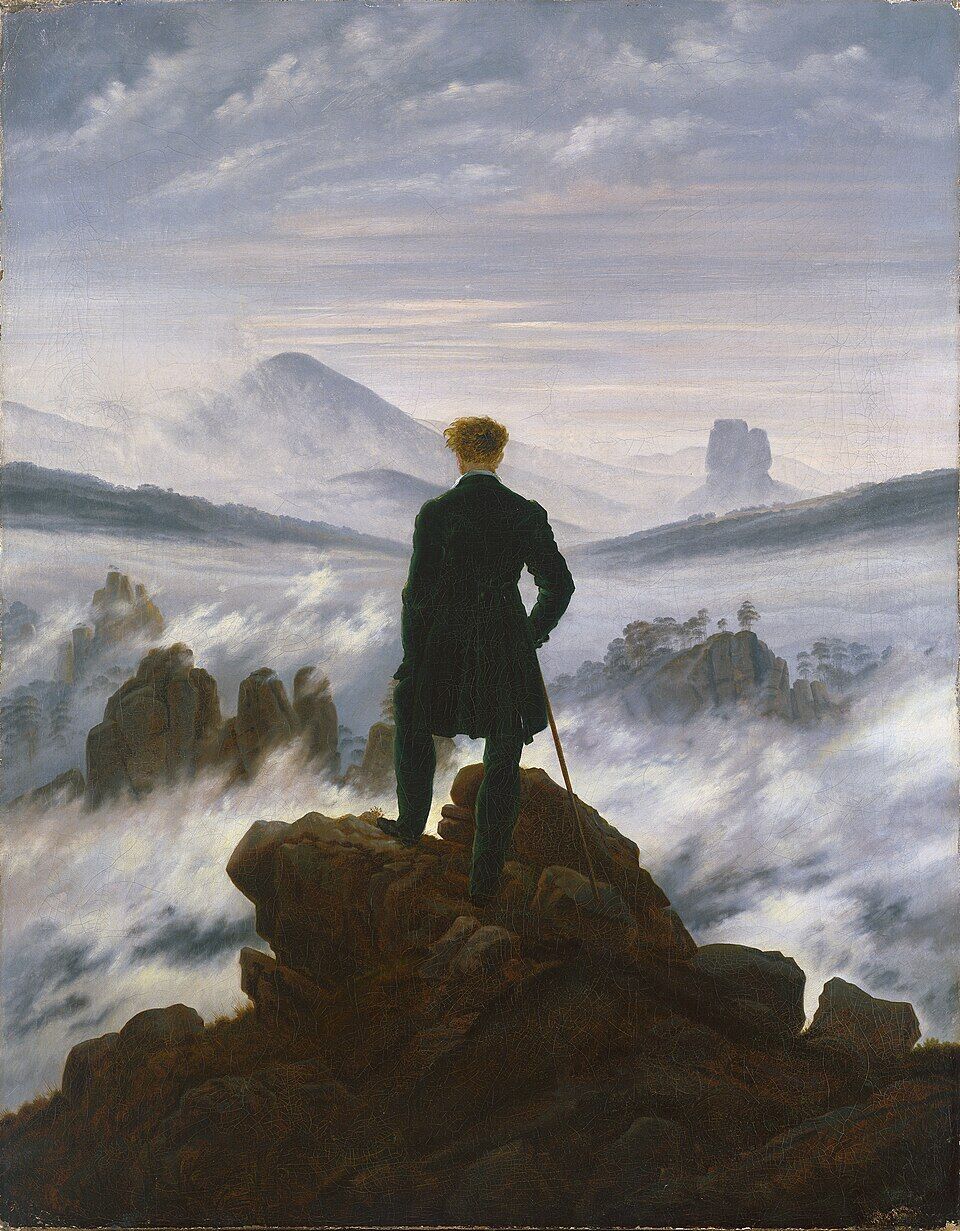
No painter embodies this more clearly than Caspar David Friedrich. In works such as Wanderer Above the Sea of Fog, Friedrich places a solitary figure facing a vast landscape, turned away from the viewer. We never see the figure’s expression, which means we’re forced to supply our own. The painting works not because it tells us what to feel, but because it leaves space for projection.
Landscape photographs that feel timeless often work the same way. They don’t overwhelm the viewer with information. They invite participation.
Early Photography and the American West
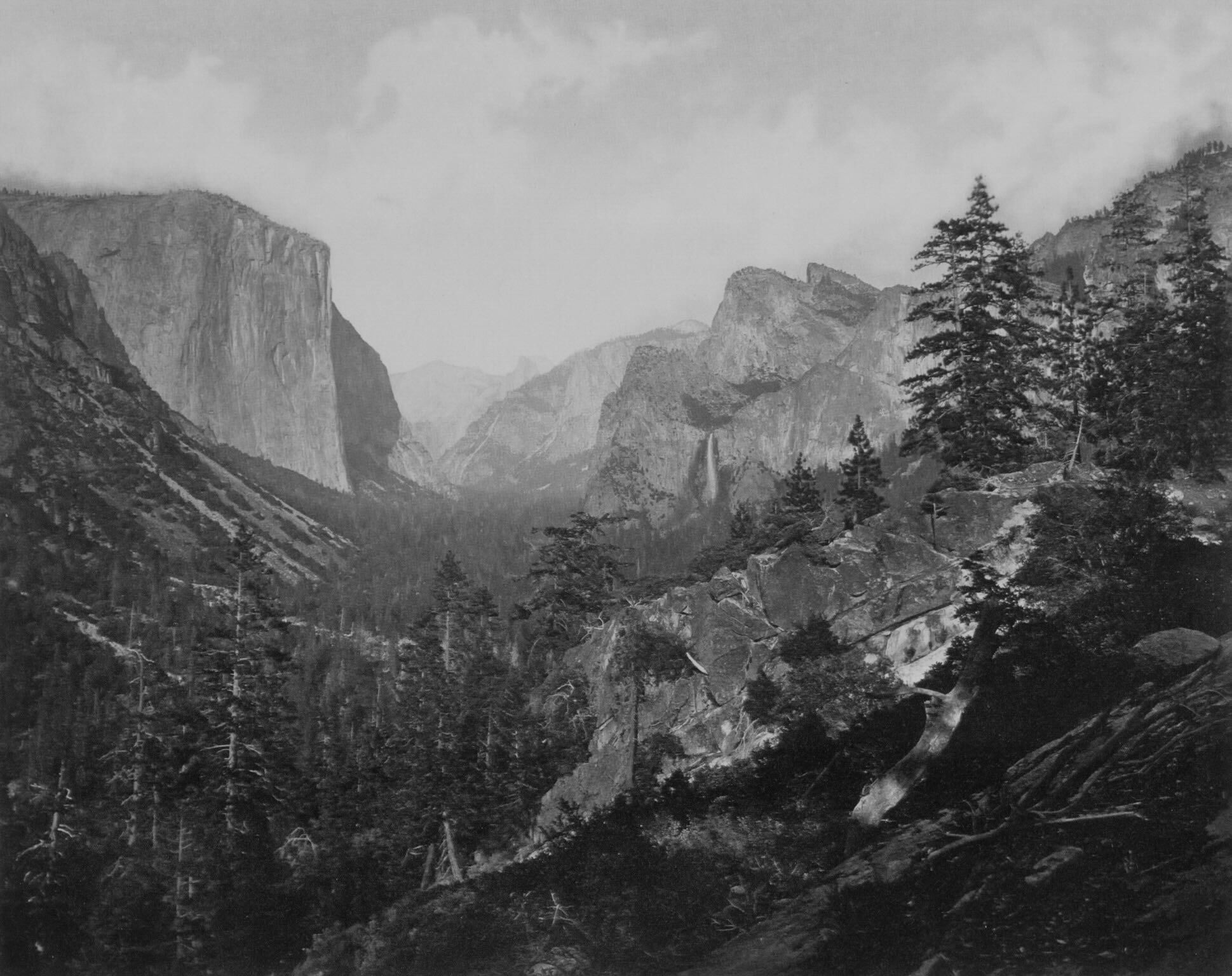
When photography entered the landscape tradition in the nineteenth century, it did so under conditions that are hard to imagine today. Photographers such as Eadweard Muybridge, Timothy O’Sullivan, and William Henry Jackson worked with heavy wooden cameras, fragile glass plates, chemical processes that required immediate development, and portable darkrooms in remote and dangerous environments.
Despite those constraints, the images they produced still feel strikingly contemporary. Much of that comes down to intent. These photographers emphasized clarity, scale, and directness. Human figures, when present at all, appear small and vulnerable, overwhelmed by the land rather than dominating it.
This approach stood in contrast to European pictorial traditions of the time. Instead of soft focus and painterly manipulation, these images embraced sharpness and detail. The result was a straightforward visual language that treated the landscape as something to be encountered rather than interpreted symbolically.
From Documentary Landscape Photography to Fine Art
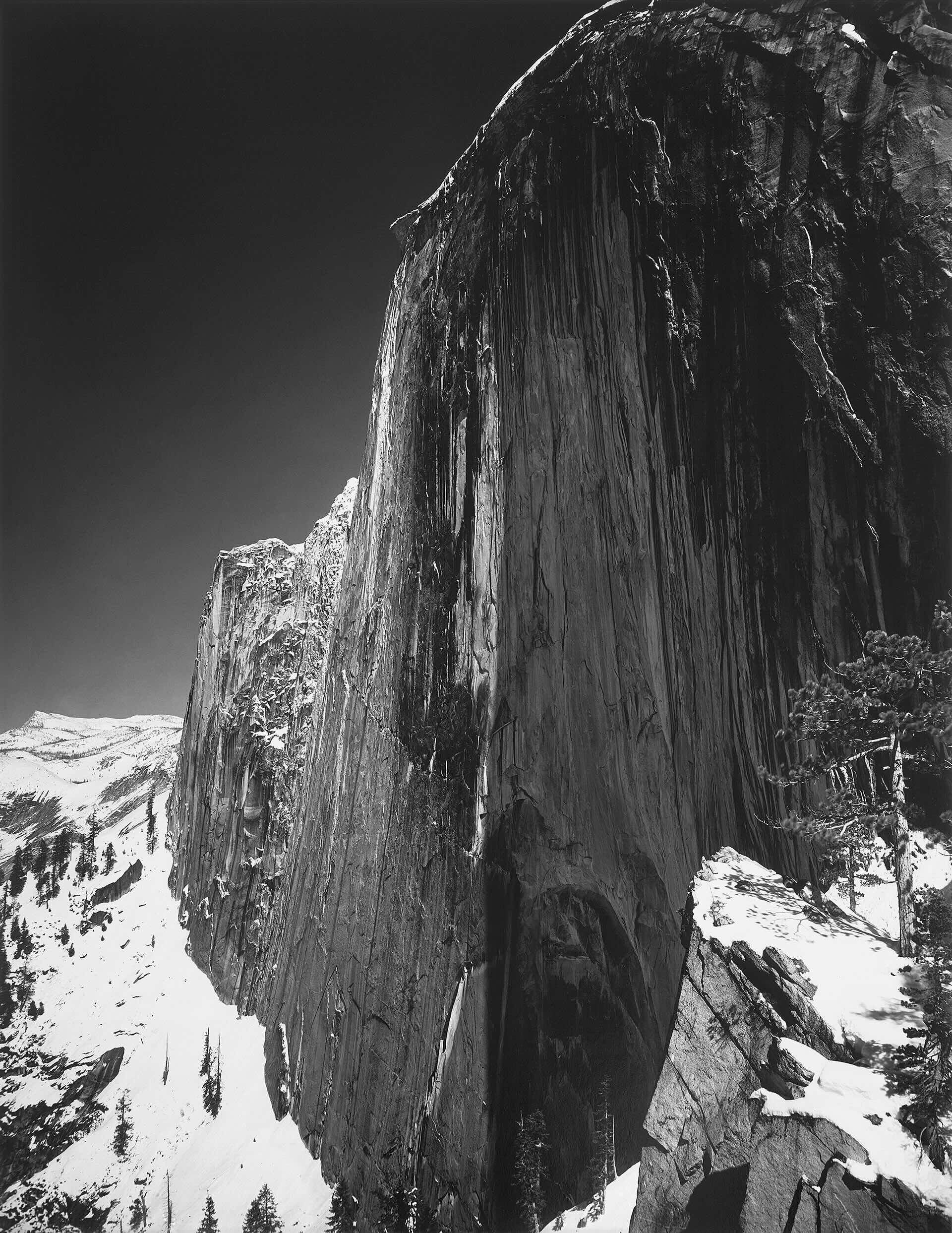
That early survey work laid the foundation for what would later be called “straight photography.” By the 1930s, photographers associated with Group f/64 (including Ansel Adams and Edward Weston) advocated for clarity, tonal precision, and unmanipulated detail.
Adams, in particular, reshaped how landscape photography was understood. His images of Yosemite and the American West present nature as powerful, ordered, and largely untouched by modern life. While often criticized for idealizing wilderness, Adams was also a committed environmental advocate. His belief was simple: if people could see the land as something extraordinary, they might be willing to protect it.
Weston approached landscape more cautiously. He was deeply interested in form and abstraction, and for much of his career he doubted whether landscape was even suitable for photography. Yet his ideas proved influential. For Weston, the subject was only a starting point; what mattered was what the photographer made of it.
For a closer look at the photographers who shaped this tradition, read about the 12 Famous Landscape Photographers Who Shaped American Photography.
Symbolism and the Inner Landscape
Another branch of photographic thinking emerged through Alfred Stieglitz and his concept of “Equivalents.” These images, often clouds, weren’t meant to depict specific places. They were intended to stand in for emotional or spiritual states.
This idea was later expanded by Minor White, who believed a photograph could act as a mirror for the viewer’s inner life. In this framework, the landscape becomes symbolic rather than descriptive. Light, shape, and texture matter more than location.
For many photographers, this approach remains deeply appealing. The landscape becomes material rather than subject and a way to say something that isn’t strictly about geography at all.
Contemporary Landscape Photography and Changing Perspectives
By the late twentieth century, photographers began questioning the celebratory wilderness tradition altogether. Artists associated with the New Topographics movement turned their attention to suburban development, industrial sites, and altered terrain. Landscape became less about beauty and more about consequence.
That thread continues with contemporary photographers such as Edward Burtynsky, Thomas Struth, and Andreas Gursky. In works like Rhein II, landscape is no longer the subject in a traditional sense. It becomes a framework for questioning systems, scale, and the nature of representation itself.
Yet outside academic and institutional spaces, the older traditions still hold enormous power. Most collectors continue to respond to landscapes that offer calm, clarity, and a sense of order that is rooted in Romanticism and reinforced by the legacy of Adams.
Why Art History Still Shapes Landscape Photography Today
Understanding the history behind landscape imagery doesn’t mean approaching photographs academically. It simply offers context. It explains why some images reward repeated viewing while others fade quickly. It clarifies why restraint, balance, and clarity tend to age better in real spaces than novelty or excess.
Landscape photography, at its best, is a continuation of art history, carrying forward ideas about light, scale, emotion, and presence using modern tools.
When a landscape photograph lives on the wall, it does more than show a place. It participates in a long conversation that began centuries before the camera ever existed about how we relate to the world around us.
If you’d like to see how these ideas translate into my work, the galleries are organized by region and mood rather than date—so you can spend time with a body of work rather than just browse it.
For practical guidance on choosing, displaying, and caring for photographic art, explore my Collector Resources, including guides to sizing, materials, framing, hanging, lighting, and print care.
Suggested Reading on Landscape Photography and Art History
For readers interested in exploring these ideas further:
- Kenneth Clark, Landscape into Art
- Simon Schama, Landscape and Memory
- John Szarkowski, The Photographer’s Eye
- Beaumont Newhall, The History of Photography
- Minor White, The New Zone System Manual (for philosophy as much as technique)
These works shaped how landscape imagery is understood today and continue to influence how photographers and collectors alike think about images, space, and meaning.
Frequently Asked Questions
When did landscape photography begin?
Landscape photography emerged during the nineteenth century, soon after photographic processes became practical enough to use outside the studio. Early photographers such as Carleton Watkins, Timothy O'Sullivan, William Henry Jackson, and Eadweard Muybridge photographed the American West using large cameras, glass plates, and portable darkrooms. Their work combined documentation with visual traditions inherited from landscape painting.
How did painting influence landscape photography?
Landscape photography inherited many compositional ideas from painting, including foreground-to-background depth, atmospheric perspective, tonal contrast, balanced horizons, and the use of light to create mood. Classical painters such as Claude Lorrain and Romantic artists such as Caspar David Friedrich helped establish visual conventions that photographers still use today.
Who influenced the development of landscape photography?
Early photographers including Carleton Watkins, Timothy O'Sullivan, William Henry Jackson, and Eadweard Muybridge helped establish landscape photography in the nineteenth century. Later photographers such as Alfred Stieglitz, Ansel Adams, Edward Weston, Eliot Porter, and Minor White expanded the genre through straight photography, abstraction, color, symbolism, and conservation.
How has landscape photography changed over time?
Landscape photography evolved from nineteenth-century survey and documentary work into fine art, abstraction, environmental advocacy, and contemporary examinations of human-altered landscapes. While early photographers often emphasized scale and geographic description, later movements explored formalism, symbolism, color, conservation, suburban development, industry, and the relationship between people and the land.