Choosing art for your home is equal parts emotion, space, and daily life. When you're choosing wall art, the photograph needs to work with the room, the available wall space, and the way you live in it—but it should also be something you genuinely want to see every day. This collector's guide walks through how to choose fine art landscape photography for a specific room, from the feeling you want to the photograph's size, orientation, color, and placement. A well-chosen photograph shapes how a room feels over time and becomes part of how you live within it, and the most successful choices are the ones made with patience.
Start With the Feeling You Want Your Art to Create
The most important question to ask yourself is how you want to feel when you encounter an image.
Landscape photography carries a wide emotional range. Some images slow a room down; others add energy or openness. A quiet forest or alpine lake can bring calm; a sunlit coastline or wide desert scene can introduce warmth and movement. If you’re drawn to a photograph because it reminds you of a place you’ve been, you'll feel that connection every time you walk in the room. But art doesn’t need to document your past. It can reflect aspiration, or simply offer a mental retreat you didn’t know you needed. The bottom line is that emotional connection should always outweigh design rules.
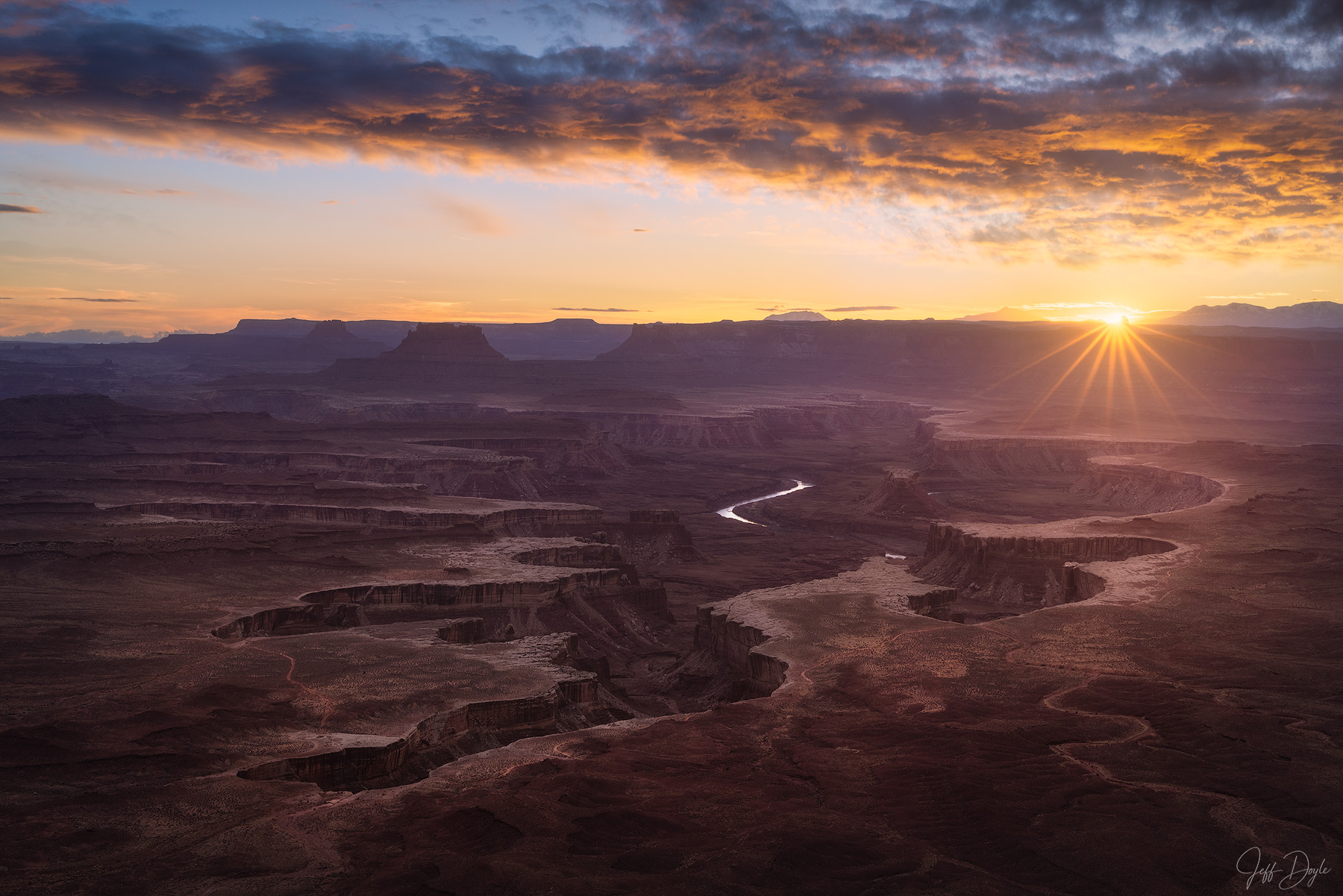
How to Choose Art for Each Room in Your Home
Every room asks something different of the art within it. In a main living area, a photograph often becomes a visual anchor that the room quietly organizes itself around. In a study or office, artwork can create focus or perspective without competing with the work happening there. In hallways and stairwells, photographs work best when they offer a brief moment of engagement rather than make a statement.
The most common mistake I see is choosing the right image for the wrong room. A photograph that commands attention works beautifully in a living room where people settle in and look around. That same image in a home office where you need to concentrate for hours becomes a distraction you eventually stop seeing. Understanding what you want the artwork to do narrows selection quickly and it usually reveals that not every photograph needs to lead. Some of the most successful installations I’ve worked on are pieces that accompany daily life rather than compete with it, images you notice differently depending on your mood, the time of day, or what you’re carrying when you pass them.
Fine Art Photography Size Guide: Choosing Wall Art by Room
How to Choose the Right Size Wall Art
The right size for wall art depends on more than the dimensions of the empty wall. Consider the furniture below it, the height of the ceiling, the distance from which the photograph will normally be viewed, and how much visual presence you want the artwork to have. A large focal wall can often support more artwork than people initially expect, while a narrow hallway or smaller room usually calls for a different scale. The table below provides a practical starting point for choosing the size of a fine art photograph for each room.
Most people underestimate how much presence a space can support, and undersizing is the most common regret after installation. The table below pairs each room with a recommended size range, the viewing distance that size reads best from, and the minimum ceiling height that keeps the piece in proportion. (Ceiling height, not wall width, is the constraint people most often overlook.) Use the table as a starting point, then confirm against your actual wall. Another technique to determine if the print size you're thinking of makes sense: tape the size on the wall and live with it for a day or two.
This fine art print size guide covers recommended dimensions for living rooms, dining rooms, bedrooms, entryways, home offices, and hallways.
Room | Recommended Minimum | Recommended Maximum | Optimal Viewing Distance | Minimum Ceiling Height |
|---|---|---|---|---|
Great Room / living room (focal wall) | 30x45 | 40x60 | 10 to 14 ft | 9 ft |
Dining room | 30x45 | 40x60 | 8 to 12 ft | 8 to 9 ft |
Primary bedroom | 24x36 | 30x40 | 6 to 10 ft | 8 ft |
Entry / foyer | 20x30 | 30x40 | 6 to 9 ft | 8 ft |
Home office / study | 16x24 | 24x36 | 5 to 8 ft | 8 ft |
Hallway (series) | 16x24 each | 20x30 each | 3 to 6 ft | 8 ft |
How Color and Tone Affect Fine Art in Your Space
Color matters in how a photograph settles into a room, but it doesn’t need to be matched precisely to surrounding furniture or walls.
Natural palettes like blues, greens, earth tones, and muted neutrals sit comfortably across a wide range of interiors. But the relationship between image and room is more specific than palette alone. A room with warm wood tones and amber light will read a cool-toned coastal image differently than a bright white space. In a room that already has strong color and visual activity, a photograph with quiet tonal transitions often holds up better over time than one that fights for attention. In a very neutral space, an image with stronger color can serve as a focal point without overwhelming.
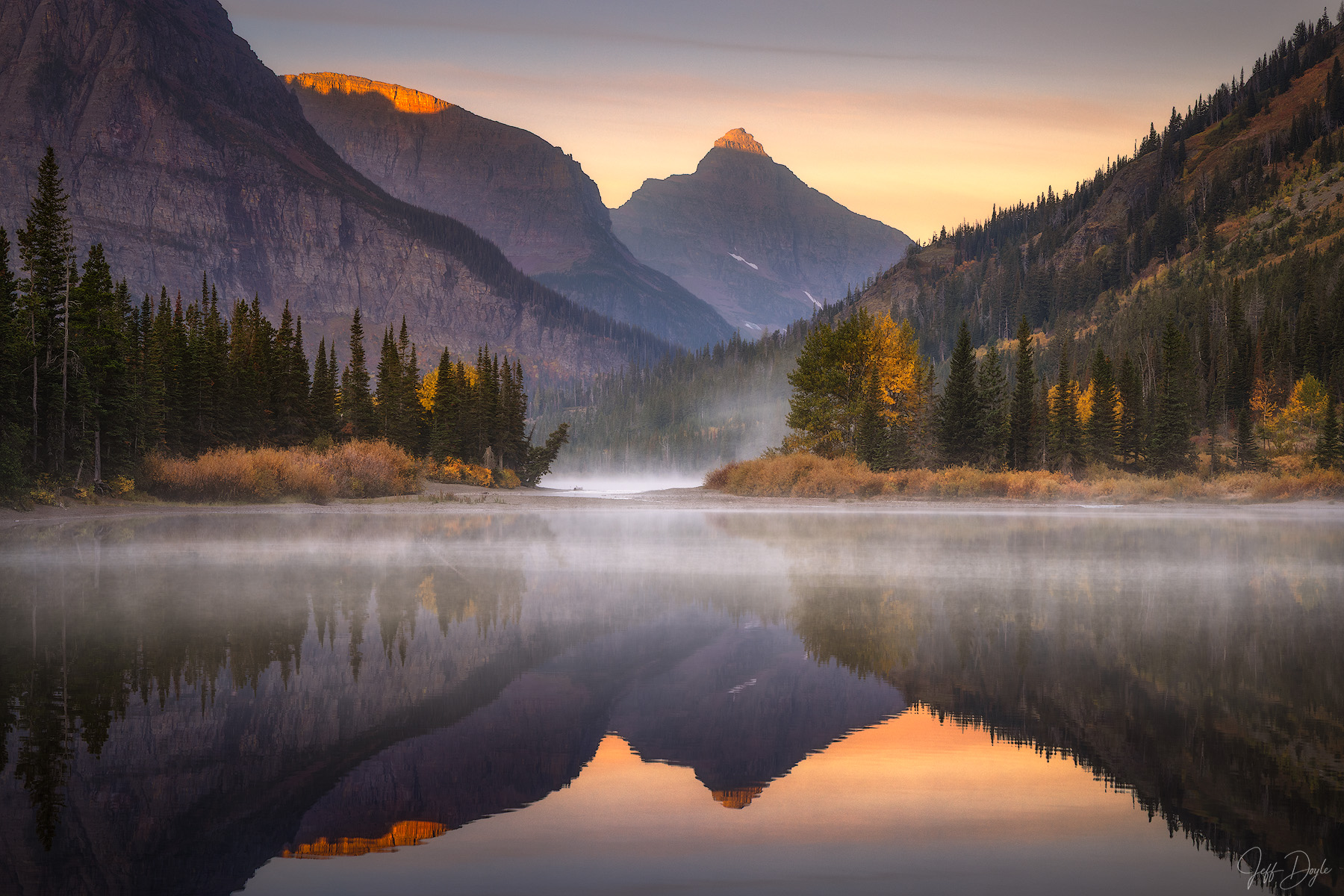
Choosing the Right Orientation: Horizontal, Vertical, or Square
Orientation should follow the architecture rather than trend. Horizontal photographs naturally complement wide furniture and open walls. Vertical images work well in narrower spaces or where height is emphasized. Square formats can introduce balance in symmetrical arrangements. Two concrete rules to anchor on: a vertical 20x30 suits a narrow 36-inch-wide niche or the space between two windows, while a horizontal 40x60 is sized for an 84-inch sofa wall, spanning roughly two-thirds of the furniture below.
Pay attention to how the photograph itself behaves. Some images feel expansive and benefit from breathing room between the frame and surrounding walls. Others are more intimate and reward closer placement. Let the composition guide the decision rather than forcing it into a predetermined slot.
How Lighting Affects Fine Art Photography in Your Home
Light changes how a photograph reads. In rooms with large windows or consistent daylight, photographs with open shadows and lighter tones read clearly throughout the day. In spaces with softer or more directional light, images with moodier contrast can feel more at home.
I’ve seen good prints look beautiful without dedicated lighting simply because the room was well lit. When picture lights or track fixtures are added, they tend to enhance depth. What’s worth avoiding is direct sun on the print. Beyond glare, repeated exposure to sunlight affects archival materials over time. Indirect light, natural or artificial, is the most forgiving type of light. In spaces where reflections are a concern, material choice becomes especially important because metal and acrylic behave differently from framed paper under bright overhead sources.
Choosing Fine Art Photography for Living Rooms, Bedrooms, and Home Offices
Certain patterns show up consistently when photographs are installed in real spaces.
Bedrooms tend to gravitate toward quieter images because they have softer light, gentler color, or scenes that don’t demand attention. These images can become part of the room’s rhythm rather than its focus. Home offices often benefit from landscapes that suggest space or distance without visual noise; expansive but uncluttered images outlast complex ones in a space where you’re also trying to think. Living and dining areas usually have more visual energy already, which allows for larger scale or stronger imagery without overwhelming the room. Bathrooms work well with smaller pieces, and water-related scenes feel naturally suited to the space, though humidity and ventilation are practical considerations that matter more here than elsewhere.
How to Choose the Right Fine Art Photograph for Your Home
When you find yourself drawn to more than one image, the most useful thing is to sit with each one longer than feels necessary. Initial reactions are real but they’re not the full story. Ask yourself:
What does this photograph mean to me, and does that meaning hold after the first impression fades?
Does it complement the room’s existing energy, or does it quietly compete with it?
Can I genuinely imagine living with this image for years, not just seasons?
Would I still want it even if I couldn’t explain why to anyone else?
The photographs that hold up best are the ones that keep offering something each time you encounter them, which is a harder quality to manufacture than visual impact, and a much more reliable indicator of whether a piece belongs in your life.
Need Help Choosing the Right Size or Placement?
Uncertainty about size and placement is normal, and it’s one of the most common reasons people delay a decision they’d otherwise feel confident about. If you’re working with an image you love but can’t quite visualize at scale in your space, I’m happy to help with that before you commit. Send me the wall dimensions, a photo of the room, and the image you’re considering, and I can walk you through sizing and material options based on the real conditions of the space.
When the right photograph finds the right space it simply becomes part of the room, something you return to quietly, again and again.
Frequently Asked Questions About Choosing Fine Art Photography
How big should wall art be relative to the furniture below it?
Aim for the artwork to span roughly two-thirds to three-quarters of the width of the furniture beneath it, and 60 to 75 percent of the focal wall. On a focal wall, err larger; undersizing is the most common regret after installation.
What size print fits above a king bed?
A king headboard is about 76 to 80 inches wide, so a single 40x60 horizontal or a pair of 24x36 verticals centered above it holds the wall well. A 24x36 alone tends to read small over a king.
Can I use fine art photography in a bathroom?
Yes, with two cautions: choose metal or acrylic rather than framed paper because of humidity, and keep the piece out of direct shower spray. Smaller water-related scenes suit the space naturally.
Should I buy one large piece, a series, or a gallery wall?
One large piece anchors a focal wall and reads as a statement from across the room. A series or gallery wall works best along hallways and longer walls where movement creates rhythm. On a focal wall, one commanding photograph almost always outperforms a grouping.
Can I use an acrylic print in a bright, window-lit room?
Yes. Lumachrome TruLife acrylic is anti-reflective and handles bright rooms better than standard acrylic, though it is still best to keep any print out of direct sun.
How do I know if a piece is right for my space?
Tape the size on the wall and live with it for a day, check how it reads in the room's actual light, and confirm the mood suits how the room is used. If you are still unsure, send me the wall dimensions and a room photo.
How do I choose art for a living room?
Large-scale landscape photography with strong composition works well as a focal point in living rooms, where viewing distances are longest and the image serves as a visual anchor. Choose an image with enough depth and tonal range to hold attention across the room, while considering the scale of the furniture and wall beneath it.
Does fine art photography work with modern and traditional interiors?
Yes. Landscape photography adapts across design styles. In modern spaces, clean compositions and minimal framing let the image lead. In traditional interiors, matted and framed paper prints complement existing textures. The subject and tone of the photograph matter more than the design era of the room.