National Park Photography: How America's Parks Have Inspired Artists and Photographers
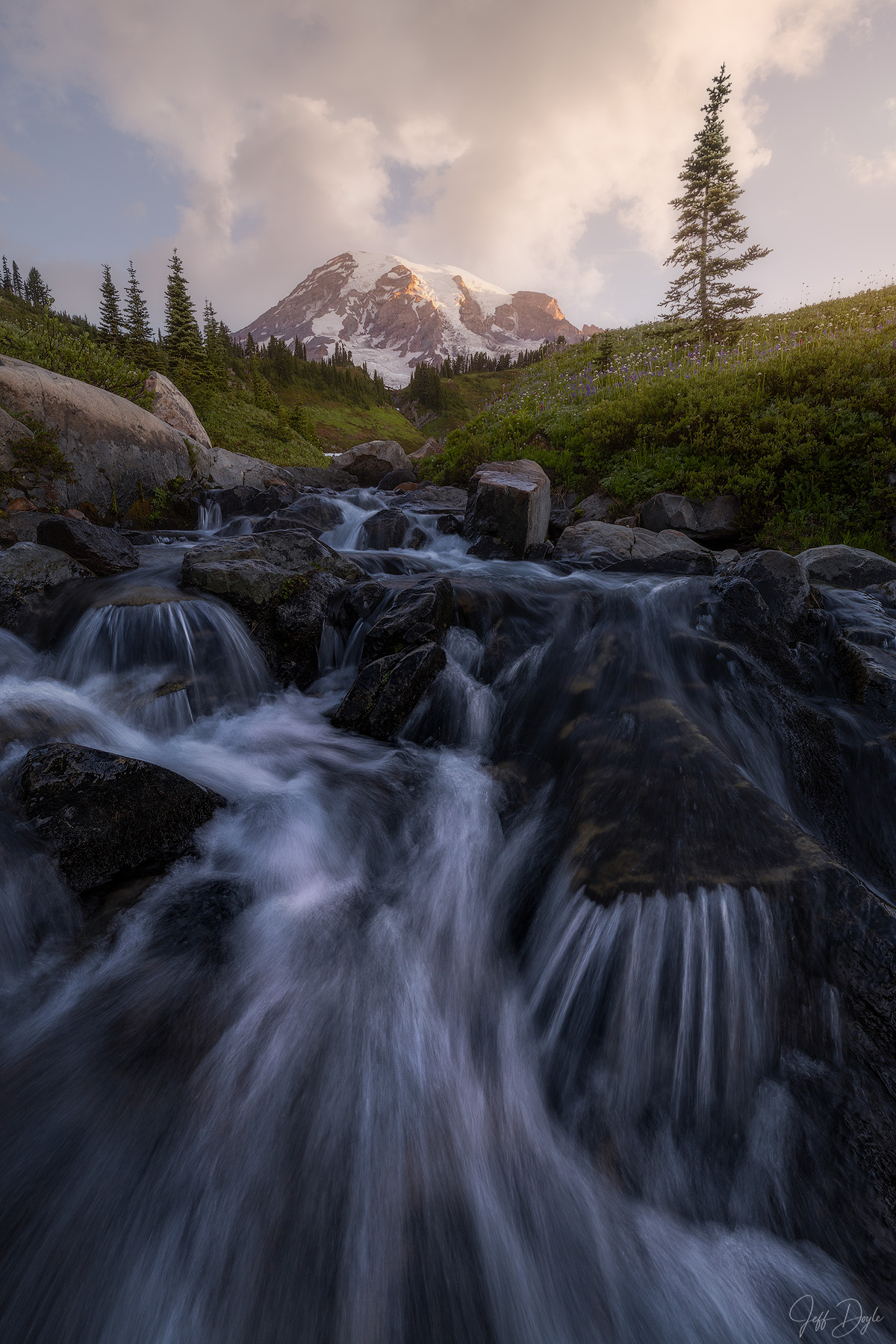
National park photography grew from a long American tradition of artists and photographers using protected landscapes to shape how people see the wilderness. Long before Yosemite, Yellowstone, and Mount Rainier became destinations for travelers, painters such as Albert Bierstadt and Thomas Moran and photographers such as Carleton Watkins and Ansel Adams used these places to create images that shaped how Americans saw the wilderness. Their work helped define what we now think of as national park art. As a fine art landscape photographer selling limited-edition prints directly to collectors, I'm working within that same tradition: returning repeatedly to Yosemite, Mount Rainier, Arches, and Canyonlands to make photographs that translate the experience of standing in those landscapes into artwork for the wall.
What's easy to forget is that the art came before the parks. Long before visitor centers, entrance stations, and designated viewpoints, artists were traveling into these landscapes in search of something difficult to describe. The scale felt larger than expected, the passage of time seemed different, and familiar ways of seeing often fell short. Their paintings and photographs helped Americans imagine these places long before most would ever visit them.
The Origins of National Park Art in America
In the nineteenth century, much of the American West was unknown to people living on the East Coast. What changed public perception more than exploration of these places was the imagery people brought back. Paintings, drawings, and later photographs gave form to places most people would never visit. They opened up a window into the wilderness for those people.
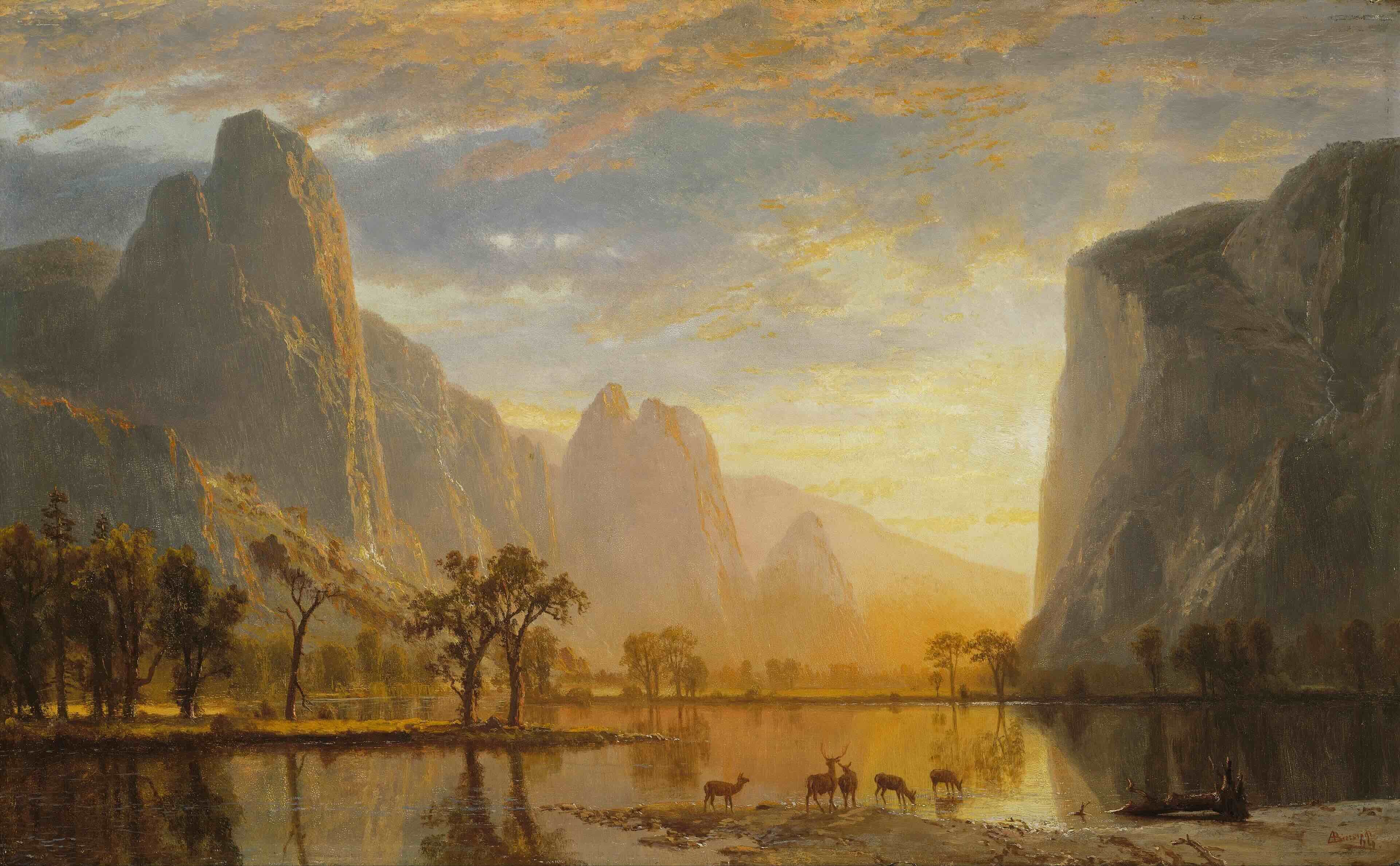
Albert Bierstadt and Thomas Moran produced large-scale paintings of the West that were deliberately dramatic. The exaggerated skies, glowing light, and oversized geology weren’t accidental failures of proportion. Their goal was impact. The paintings needed to stop people in their tracks, particularly viewers who would never travel west themselves. Those images circulated widely in exhibitions, private homes, and public buildings, and helped turn unfamiliar terrain into something people felt invested in protecting. The case for preserving these landscapes was made visually before it was made politically.
Collectors still respond to the same qualities that made Bierstadt's paintings famous: dramatic light, strong sense of scale, and the feeling of standing inside the landscape. Those are the qualities I look for when creating large-format national park prints for collectors today.
How Early National Park Artists and Photographers Shaped Conservation
Yellowstone became the world’s first national park in 1872, but the groundwork had been laid years earlier. Writers like George Perkins Marsh warned that human activity could permanently alter ecosystems. Gifford Pinchot argued for long-term stewardship over unchecked exploitation. These were important ideas, but for most Americans they stayed abstract.
Visual evidence was what moved public opinion. The Yosemite Grant Act of 1864, signed by Lincoln, set aside Yosemite Valley and the Mariposa Grove for preservation eight years before Yellowstone, but it entrusted the land to the state of California. Yellowstone, in 1872, became the first landscape Congress designated a national park outright, and Yosemite itself didn't gain national park status until 1890. Thomas Moran's paintings and Carleton Watkins' photographs were shown directly to members of Congress. The argument wasn't made in testimony alone. Lawmakers saw what was at stake.
The painters now grouped under the Hudson River School: Thomas Cole, Frederic Edwin Church, Sanford Robinson Gifford, Bierstadt, Moran, were constructing an idea of America through landscape. Their paintings combined the structured depth of Classical landscape painting with the emotional force of Romanticism, producing a vision of wilderness that was vast, luminous, and morally elevated. It was a deliberate vision, and it worked. Frederick Law Olmsted was applying similar thinking closer to home: through Central Park and Golden Gate Park, he argued that access to nature should be part of everyday life, not something reserved for the remote frontier. John Muir, pictured below with Theodore Roosevelt, carried that vision into activism a generation later. His writing and his 1903 camping trip with Roosevelt in Yosemite helped push the valley into full national park protection and gave the movement its most enduring voice.

Yosemite Fine Art Photography: From Carleton Watkins to Ansel Adams
If there’s a single place that anchors the visual history of American landscape art, it’s Yosemite.
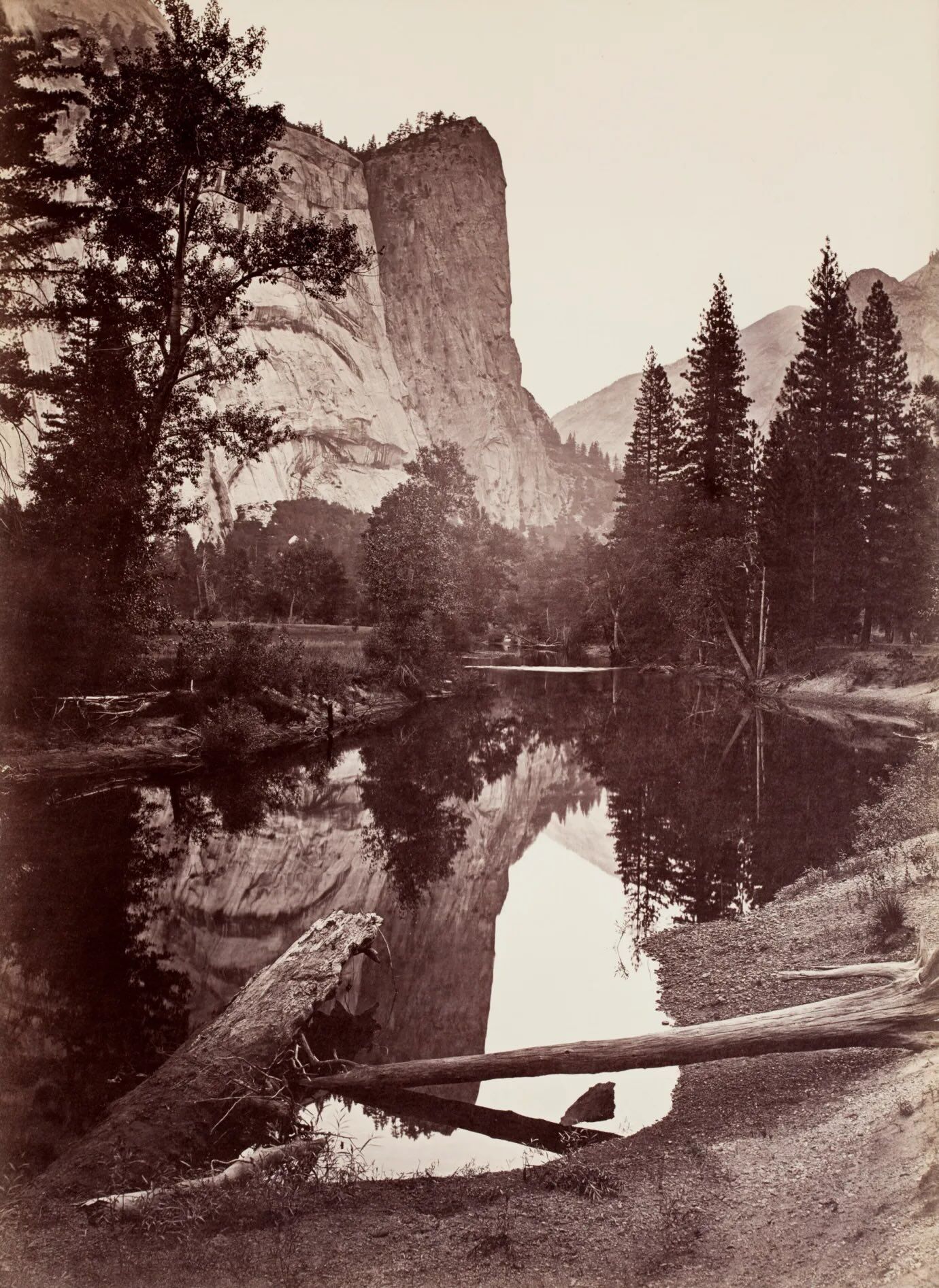
When Carleton Watkins hauled his enormous camera equipment into the valley in the 1860s, he wasn’t thinking about art history. He was solving practical problems: how to transport glass plates, where to set up, how to make exposures in unpredictable light. But the photographs he produced did something no one expected. They made Yosemite appreciable to people who had never been west of the Mississippi. The mammoth-plate prints revealed sheer walls, waterfalls, and open valleys with a level of detail that paintings couldn’t match, and they convinced lawmakers that this particular landscape was not just remarkable but irreplaceable.
Yosemite also happens to embody the Picturesque tradition almost perfectly. The valley's most iconic viewpoints, Tunnel View, Glacier Point, and Valley View, present layered compositions that align with eighteenth-century scenic ideals as if they were designed for it: elevated vantage points, strong foreground framing, receding planes, and atmospheric distance. The place seems to compose itself before a camera is raised.
Ansel Adams returned to Yosemite for decades, studying how light moved across granite, how storms reshaped mood, how snow simplified form. Yosemite became less a subject than a lifelong investigation for him.
Many collectors searching for Yosemite wall art discover Adams first. What they're often looking for, though, is a contemporary photograph made with the same patience for weather, light, and season that defined his work.
Mount Rainier Fine Art Photography: Presence, Weather, and Reverence
Rainier dominates its surroundings in a way that feels almost confrontational. Rising abruptly from lowland forests, it’s visible from hundreds of miles away yet frequently hidden by weather. The challenge for photographers with such an imposing subject is how to capture it within the broader landscape.
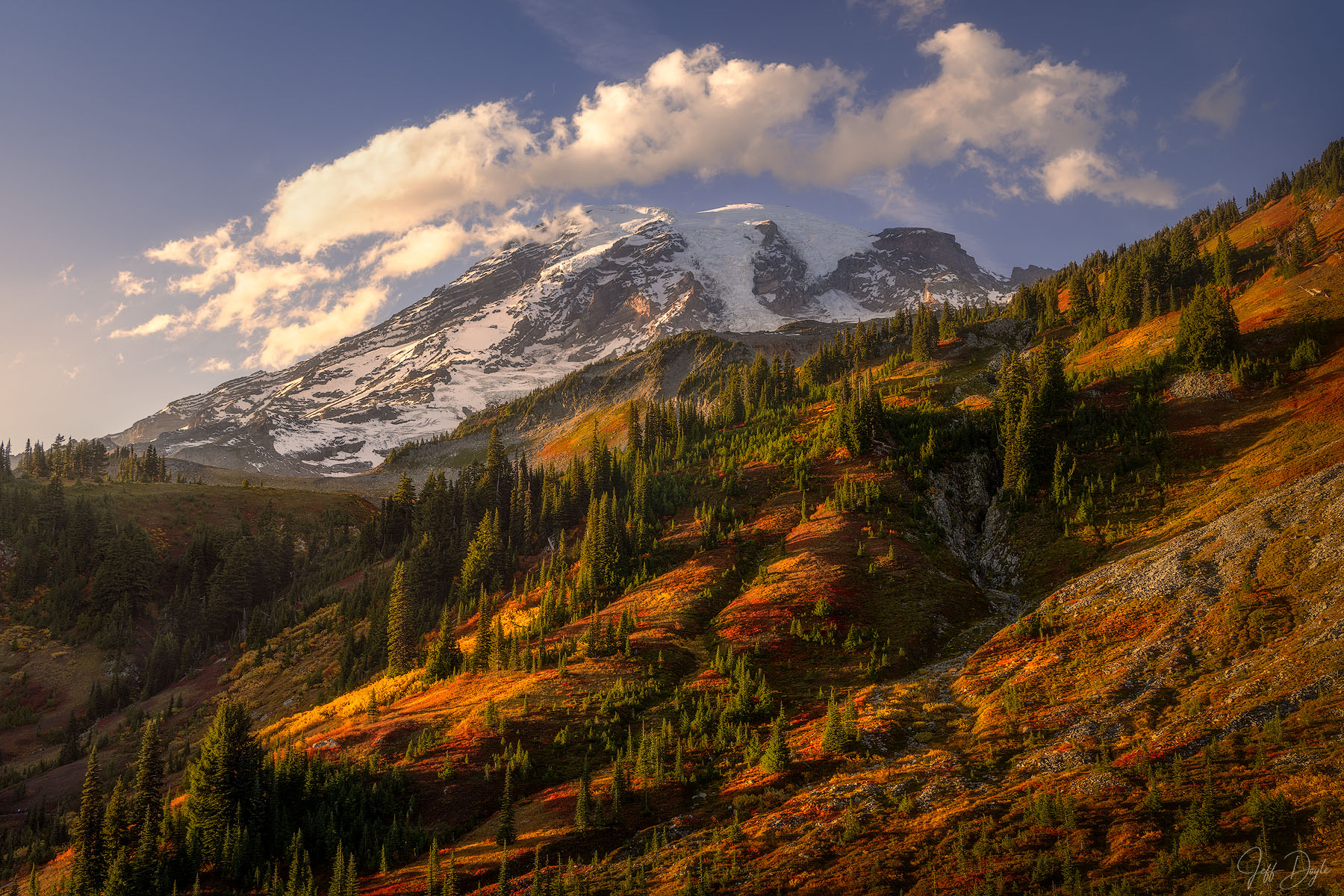
My image 'Autumn Ascent' is the opposite of understated. Sunset light was hitting the mountain full-on, and the scrub oak across the lower slopes had peaked with deep oranges and yellows filling the foreground. Rainier rose behind it all with clouds moving through the upper elevations. It's a grand image, and it earned that quality. The conditions required patience and familiarity: knowing when the oak color typically peaks, knowing where to position to let the foreground carry weight against the mountain, knowing that the window for that combination of color and light is measured in days, not weeks.
Clouds wrap and unwrap the peak throughout the day, altering scale and mood by the hour. The strongest images I’ve made from this park come from familiarity rather than timing, knowing the mountain well enough to recognize the moment it offers something it doesn’t offer every day.
Arches and Canyonlands National Parks Photography: Abstraction, Scale, and Geological Time
Arches and Canyonlands confront artists with something different: time. These parks are the accumulation of millions of years made visible in stone.
Canyonlands was the first national park I visited, and I went alone for sunset with no real plan beyond being there. Nothing I’d seen in photographs prepared me for the scale. Standing at the mesa rim with the canyon spreading out in every direction, I remember thinking nothing I'd ever seen came close to that scale.
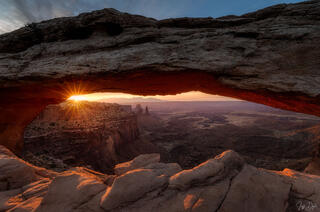
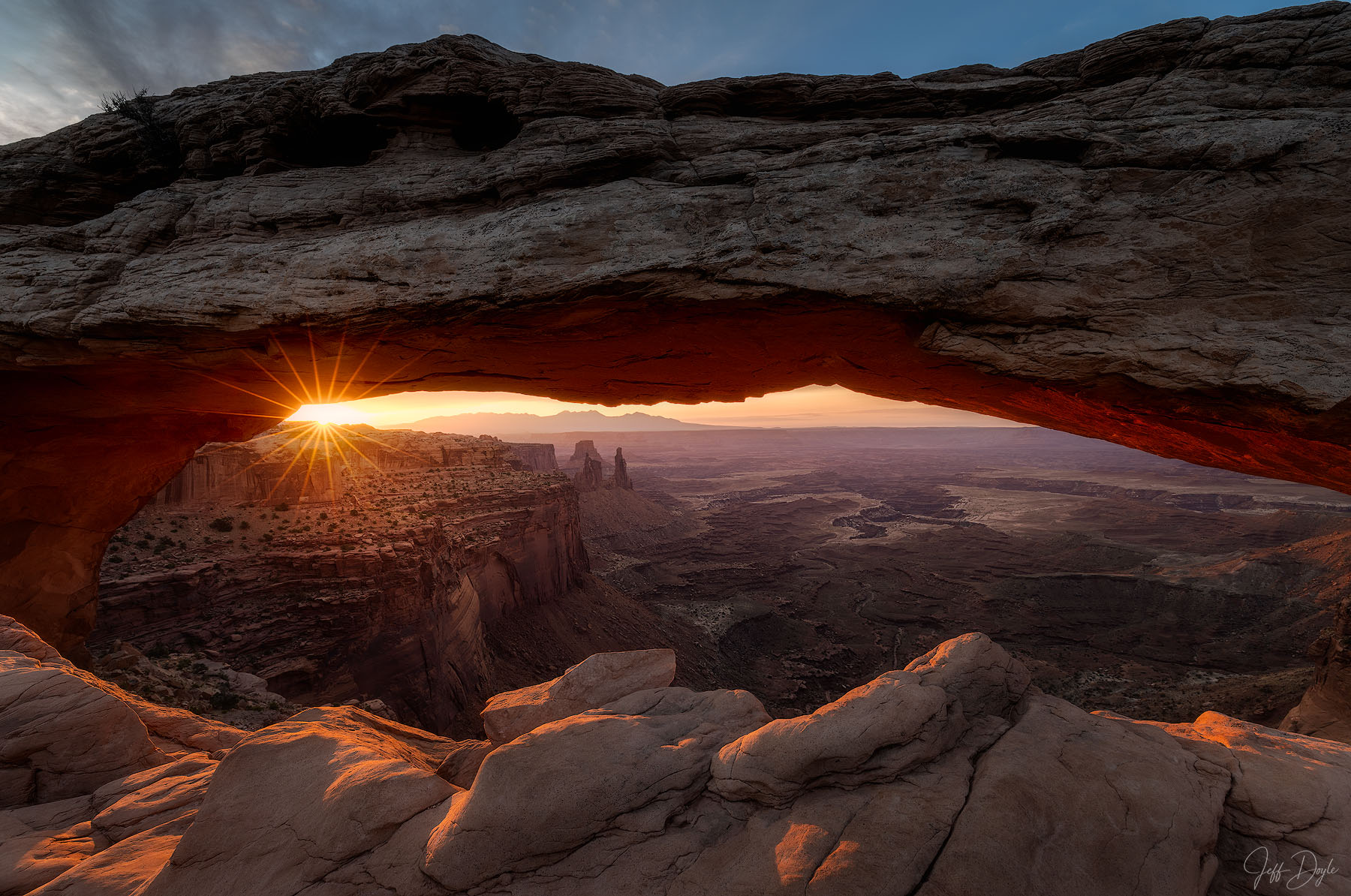
The image I keep coming back to from the canyon country is “Cradle of Light,” made at Mesa Arch in the early morning hours when I was one of only a handful of people at the arch. The sandstone glowed from beneath as the sun cleared the horizon and the underside of the arch caught the light and the canyon dropped away behind it. It’s a photograph that required being there before dawn, before the crowd arrived, and simply waiting. I’ve returned to Mesa Arch multiple times since, each visit teaching me something different about how the light moves through that opening across seasons.
These parks teach editing. The temptation is to include everything. The discipline is learning how much to leave out. I’ve made some of my worst photographs in these canyons chasing too many elements at once, and some of my best by deciding to look at almost nothing.
National Park Photography and Conservation in the 20th Century
As photography became more accessible in the twentieth century, it became the dominant visual language of conservation. Photographs could reach audiences paintings never could, and the argument for conservation could be reproduced cheaply and distributed widely.
Adams understood this. His photographs of Yosemite, Yellowstone, and the Tetons were arguments as much as images. By presenting wilderness as ordered, luminous, and worth reverence, he helped build public support for preservation at a moment when it was genuinely under threat. The tradition continues today through artist-in-residence programs, park galleries, and the cameras visible at nearly every overlook in the country. The relationship between landscape photography and conservation isn’t accidental. It goes back to Watkins standing in Yosemite with glass plates and a portable darkroom, solving practical problems.
What Photographing National Parks Has Taught Me
What national parks have taught me, more than any single technique, is the difference between arriving at a place and knowing one. The images that hold up over time are rarely made on a first visit. They come from the third or fourth trip, when the urgency has settled and you stop trying to take something and start paying attention to what’s actually there.
I keep returning to these parks because the conditions are never the same twice. A different season, a different hour, a storm moving through at the right moment, the landscape keeps offering new ways to see what you thought you already knew. That’s not something you can manufacture or schedule. It requires showing up repeatedly and being willing to come away with nothing when the conditions don’t align.
Scale does something to the way you work. In places like Canyonlands or at the base of Rainier, the instinct to impose a composition breaks down. The landscape simply doesn’t cooperate with it. You either learn to respond to what’s in front of you or you keep making the same photograph everywhere you go.
What National Parks Continue to Teach Landscape Photographers
These places continue to function as teachers because they resist easy interpretation. They expose shortcuts quickly. A weak composition that might pass in an ordinary landscape becomes obviously insufficient in front of Half Dome or the Windows section of Arches. The stakes are higher because the standard of comparison is higher.
What Watkins understood when he hauled his equipment into Yosemite in the 1860s is still true now: these landscapes demand full attention, and they give back in proportion to what you bring to them. The parks didn’t create that relationship between artist and land. But they’ve preserved the conditions that make it possible.
After years of working in these places, what I value most isn’t any single image. It’s the stillness they require. When the light is doing something extraordinary and the only thing to do is be present with it, these parks have a way of clearing everything else out. That’s what keeps me returning, not just to make photographs, but because there are very few places left where that kind of quiet is still available.
If this history resonates with you, explore my Yosemite fine art prints, Mount Rainier fine art prints, and Canyonlands fine art prints. Each photograph is produced as a limited edition and printed for collectors who want the atmosphere of these national parks in their homes.
Frequently Asked Questions About National Park Art and Photography
Why are national parks such a popular subject for artists?
National parks contain some of the most dramatic landscapes in North America, from Yosemite's granite cliffs to the vast canyons of the Southwest. Their scale, beauty, and changing conditions have inspired painters, photographers, and writers for generations, making them some of the most enduring subjects in American art.
Which artists helped inspire the creation of America's national parks?
Artists played an important role in building public support for conservation. Painters Albert Bierstadt and Thomas Moran introduced Americans to the landscapes of the West through dramatic paintings, while photographer Carleton Watkins documented Yosemite with unprecedented detail. Their work helped people understand the value of preserving these places long before many could visit them in person.
Why is Yosemite so important in the history of landscape photography?
Yosemite has inspired some of the most influential landscape photographers in American history, including Carleton Watkins and Ansel Adams. Its granite cliffs, waterfalls, changing weather, and dramatic light have made it one of the most photographed landscapes in the world and a defining subject in both landscape photography and national park art.
Who are some of the most influential national park photographers?
Carleton Watkins and Ansel Adams are among the most influential photographers associated with America's national parks. Watkins' nineteenth-century photographs of Yosemite helped introduce the landscape to a wider audience and supported early preservation efforts. Adams later made Yosemite and other Western landscapes central to his photographic work and conservation advocacy. Their influence continues in the work of contemporary landscape photographers who return repeatedly to national parks to study changing light, weather, season, and scale.
What influence did Ansel Adams have on modern landscape photography?
Ansel Adams helped establish landscape photography as a respected fine art form while using his images to promote conservation. His photographs of Yosemite and other national parks shaped how generations of people viewed the American wilderness and continue to influence photographers today.
What makes a great national park photograph?
The strongest national park photographs do more than document a location. They combine exceptional light, thoughtful composition, weather, season, and a personal connection to the landscape. Many memorable images are the result of repeated visits and a deep familiarity with a place rather than a single lucky moment.
Are your national park photographs available as fine art prints?
Yes. My photographs from Yosemite, Mount Rainier, Canyonlands, Arches, and other national parks are available as limited-edition fine art prints. Each image is produced using archival materials and crafted to bring the beauty, atmosphere, and sense of place found in these remarkable landscapes into homes and offices.