
Triptych Wall Art: Three-Panel Landscape Photography Prints
A triptych turns one photograph into a three-panel composition. Instead of presenting a landscape as a single rectangle, the image extends across three coordinated pieces with intentional space between them, allowing the wall itself to become part of the presentation.
I particularly like the format for panoramic landscape photography. Wide mountain ranges, desert horizons, coastlines, and layered scenes can carry enough visual movement to travel naturally across multiple panels, while the added physical scale can give the photograph considerably more presence in a room.
What Is Triptych Wall Art?
A triptych is an artwork made from three separate panels that are intended to be viewed together as one composition. The word comes from the Greek for "three-fold," and the format is best known from medieval and Renaissance altarpieces built from three hinged panels. In contemporary interiors, a triptych is often used to present a single image across three pieces or to organize three closely related works as one visual statement.
In my own work, I am most interested in the first approach: taking a landscape photograph that genuinely benefits from a wider presentation and dividing that image across three coordinated panels. The result is still one photograph and one composition. The physical breaks simply change the way it occupies the wall.
A Triptych Is More Than Three Matching Prints
There is an important distinction between a true photographic triptych and a group of three separate photographs. A coordinated series can work beautifully, but each photograph still has its own composition. In a triptych made from one landscape photograph, the three panels are parts of a single image.
That continuity is what creates the effect. Lines, light, atmosphere, and subject matter continue across the gaps, so the eye mentally reconnects the three panels. The spacing becomes part of the presentation without turning the photograph into three unrelated pieces.
Why Panoramic Landscapes Work So Well as Triptychs
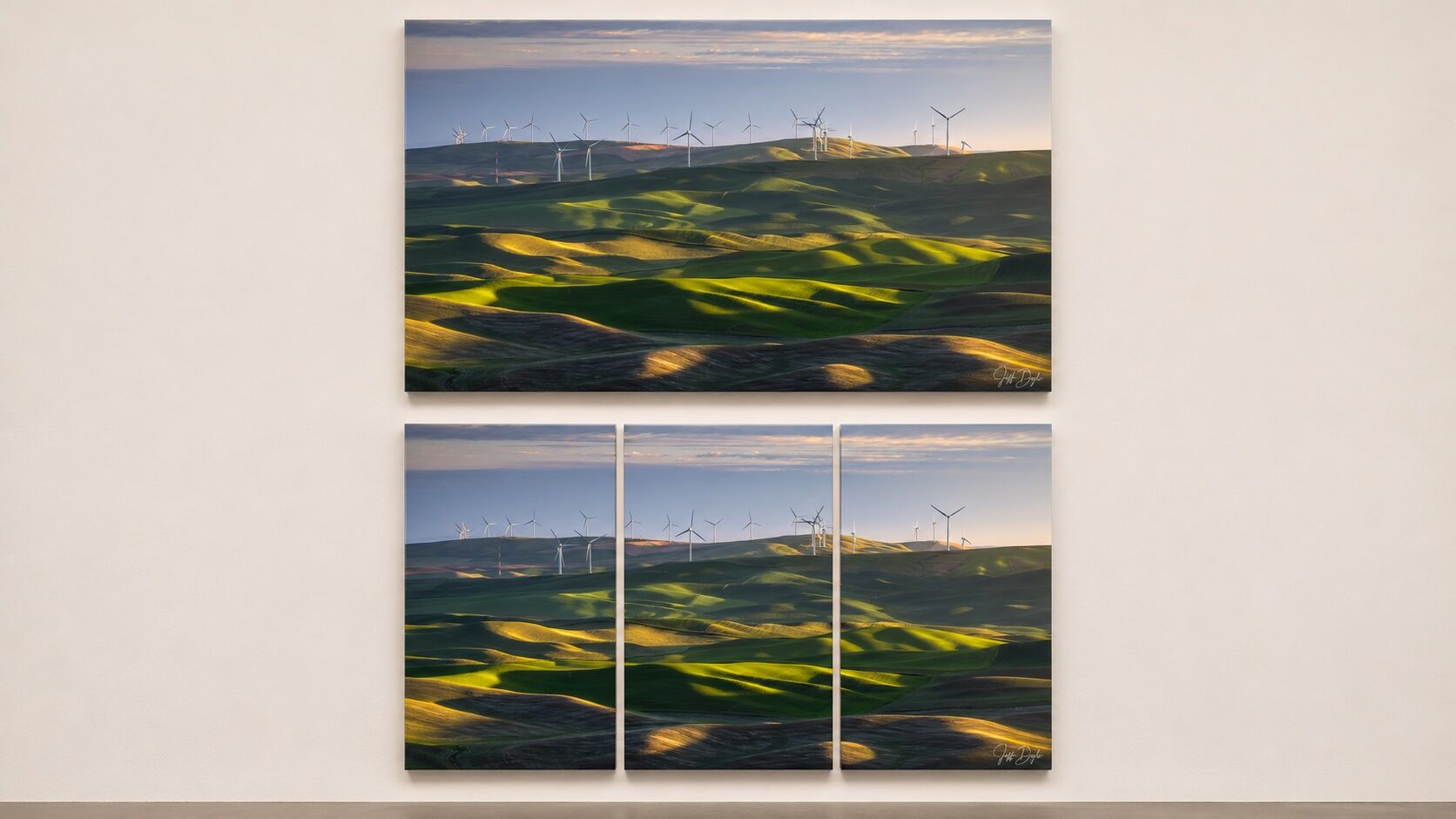
Landscape photographs often contain the kind of horizontal movement that suits a multi-panel presentation. A ridgeline can continue from one panel into the next, a coastline can carry the eye across the wall, and changing light can create a progression through the entire composition rather than concentrating everything in the center.
Panoramic photographs are natural candidates because they were already composed around width. Foreground, atmosphere, light, and distant terrain work together across a long visual field. A conventional crop can force a choice between preserving the landscape and fitting the wall. A triptych provides another option by letting that wider composition occupy substantial architectural space.
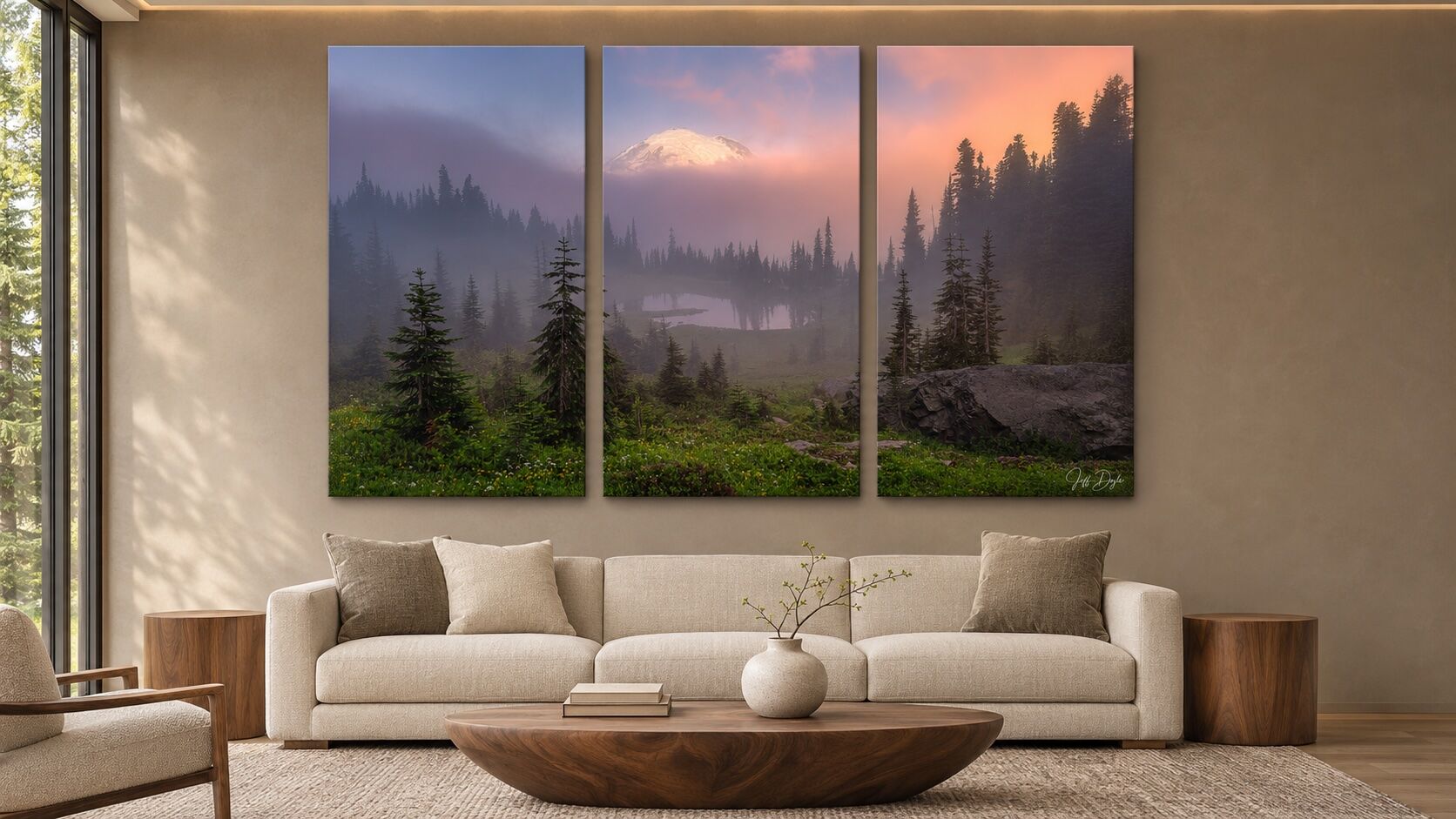
A panorama can still be produced as one continuous print, and sometimes that remains the best answer. The triptych becomes the better choice when the wall, scale, access, or character of the room makes a multi-panel presentation more appropriate. The Mount Rainier image at the top of this page is a good example: the meadow, lake, and mountain spread across the full width of the frame, so each panel carries part of the scene without any single panel feeling empty.
Which Photographs Make Good Triptychs
The fact that a photograph can technically be divided into three panels does not mean it should be. I would rather keep a strong photograph intact than force it into a format that damages the composition.
Dividing the photograph is not simply a matter of cutting it into three equal pieces. The panel breaks need to respect the actual composition. A break through a dominant mountain peak, an important tree, or another critical visual element can weaken an otherwise strong photograph. Images whose strength depends on a tightly contained composition, rather than movement across a wide frame, are usually better left whole.
When I consider a triptych, I look at where the eye naturally travels through the scene and where physical separation can occur without interrupting that movement. Depending on the photograph and the wall, the panels can also be proportioned around the overall presentation rather than treated as three arbitrary slices. I look at the photograph first and the format second.
Spacing, Sizing, and Hanging a Triptych
Multi-panel artwork is judged as one piece, so the measurements that matter are the ones that describe the whole composition, including the gaps.
Space between panels. A gap of roughly 2 to 3 inches between panels works for most triptychs. It is wide enough to read as intentional and narrow enough that the eye still connects the image across the breaks. Very large installations on long walls can carry slightly wider spacing.
Overall width. Measure across all three panels plus both gaps. Above a sofa, bed, or console, the complete triptych usually looks best at about two-thirds of the furniture's width. On an open wall with no furniture, size it to the wall itself and the distance from which it will be viewed.
Height. Center the full composition, not any single panel, at about 57 to 60 inches from the floor, the same eye-level standard used for most framed artwork. All three panels should share an exact top and bottom line, since even a small misalignment breaks the continuity of the image.
For hardware, leveling, and installation detail, see my guide to hanging fine art photography. For choosing artwork according to wall and room proportions more generally, see my guide to choosing fine art photography for your home.
Scale Changes the Experience
Triptych wall art is particularly useful on long walls because the composition can occupy substantial width without becoming one enormous physical panel. That makes the format well suited to large living spaces, entries, feature walls, corridors, offices, hospitality interiors, and other rooms where smaller artwork can feel disconnected from the architecture. Three smaller panels are also easier to ship, carry, and install than a single oversized print.
Materials for Triptych Photography
Material changes the character of any photographic print, but I do not think the triptych format needs its own separate set of material rules. The decision should still begin with the photograph, the room, the lighting, the scale, and how the finished work will be used.
My photography is available in Lumachrome TruLife acrylic, ChromaLuxe metal, and archival cotton-rag paper, depending on the image and project requirements. The differences between those materials are covered in detail in my Fine Art Photography Print Mediums guide.
Triptychs and Limited Editions
When one of my photographs is produced as a triptych, the three panels together represent one artwork. The complete triptych counts as one edition number rather than three separate prints.
Every image in my collection is limited to 100 prints across all sizes and substrates combined. If you want the broader explanation of how editions, print size, and material relate to the work, see my guide to editions, sizes, and materials.
Triptych Wall Art for Interior Designers and Commercial Spaces
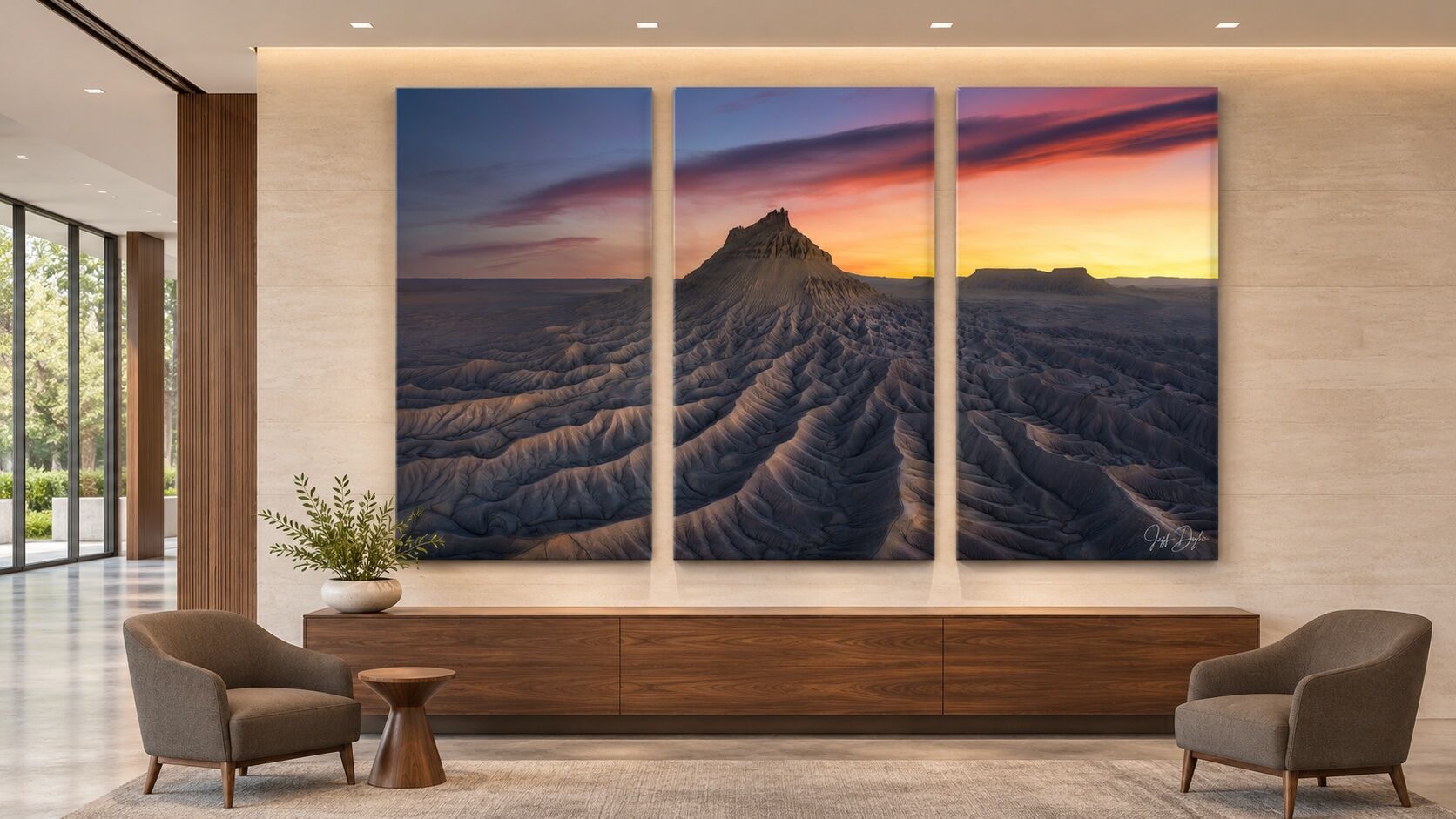
The format becomes particularly useful in design and commercial projects because long architectural walls do not always suit conventional print proportions. Corridors, reception areas, conference spaces, hotel interiors, and large residential walls can all benefit from artwork designed around the architecture rather than simply enlarged to fill it.
I can work with wall dimensions, elevations, sightlines, and presentation requirements when a triptych is being specified for a project. Interior designers can find more about presentation comps, custom sizing, and project-specific sourcing on my Fine Art Photography for Interior Designers page, while larger projects are covered through my Trade & Commercial Fine Art Photography program.
See a Triptych on Your Own Wall
Multi-panel artwork can be difficult to judge from dimensions alone because both the individual panels and the gaps between them affect the final scale. Seeing the complete composition in the actual room can make the decision much easier.
I offer a complimentary wall preview so you can see a photograph at approximate scale in your own space before ordering. Send me a photograph of the wall, a measurement I can use for scale, and the image you are considering, and I can build a visualization around the room.
If you are drawn to a particular photograph but are not sure whether it will work as a three-panel piece, ask me before committing to the format. I would rather recommend the presentation that serves the photograph and the wall than turn every wide image into a triptych. Send me the photograph, wall dimensions, and project details, and I can help determine whether a single panoramic print or a three-panel presentation makes more sense.
Frequently Asked Questions About Triptych Wall Art
What is a triptych?
A triptych is an artwork made from three panels designed to be viewed together as one composition. In photography, it usually means a single image divided across three coordinated panels hung with small, even gaps between them.
How far apart should triptych panels be?
A gap of about 2 to 3 inches works for most triptychs. That spacing reads as intentional while keeping the image visually connected across the breaks. Very large installations can use slightly wider gaps.
How big should triptych wall art be?
Measure the full composition, including both gaps. Above furniture, a triptych usually looks best at about two-thirds of the furniture's width. On an open wall, size it to the wall and the distance from which it will be viewed.
How do you hang a triptych?
Center the full composition at about 57 to 60 inches from the floor, keep the gaps between panels equal, and align the tops and bottoms of all three panels exactly. Hang the center panel first, then measure out to place the two side panels.
Does a triptych count as one print or three?
In my limited editions, a triptych counts as one edition number. The three panels together are one artwork, and every image is limited to 100 prints across all sizes and substrates combined.
Can any photograph be made into a triptych?
Technically, yes, but many photographs should not be. Images with important subjects where a panel break would fall, or compositions that depend on being tightly contained, are usually stronger as a single print. Wide panoramic landscapes with movement across the full frame make the best candidates.