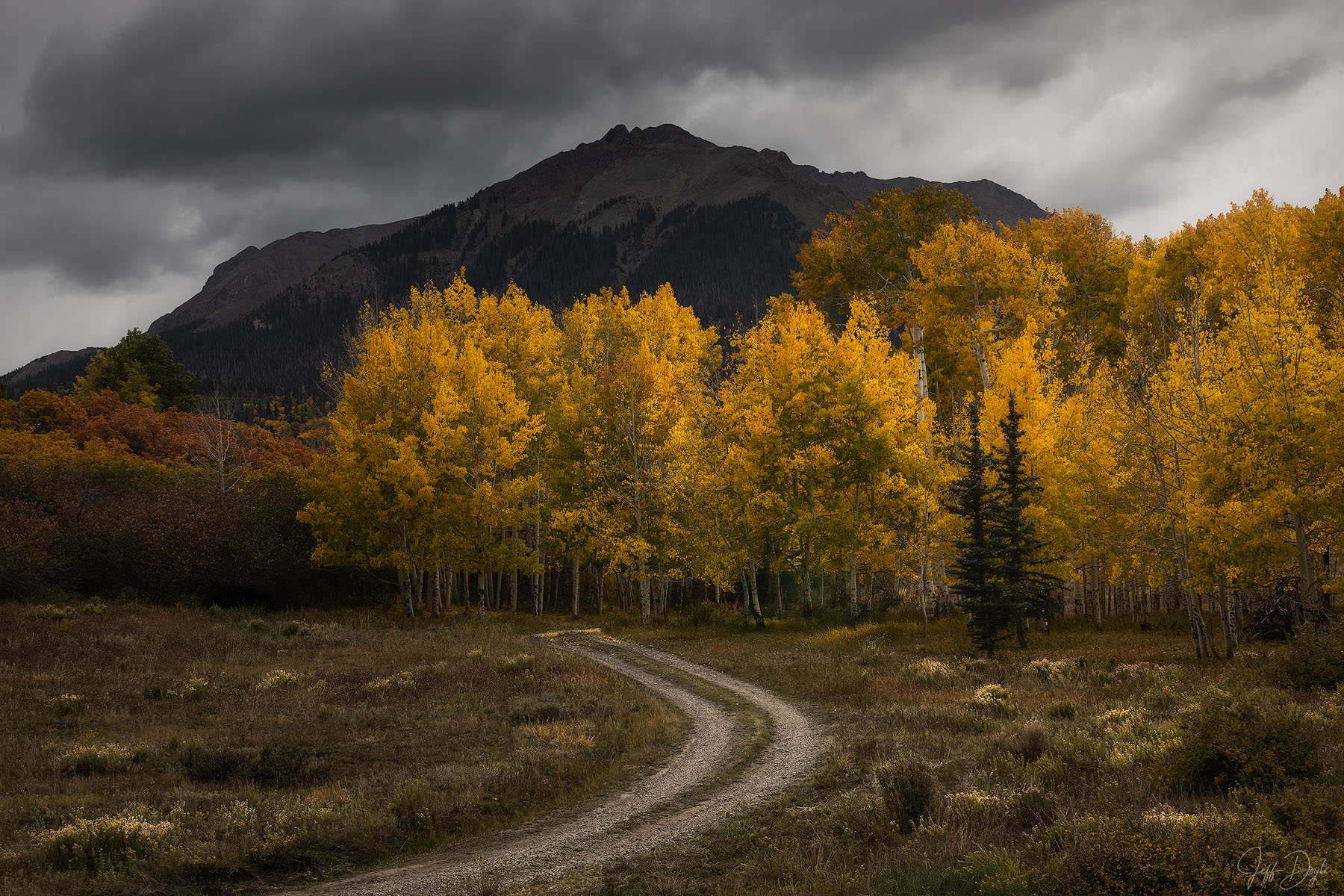
A collector I worked with a few years ago told me that the photograph hanging in her hallway reminded her of a road trip she took with her father when she was twelve. She hadn’t been back to that part of the country since. The image showed no famous landmark, no dramatic moment. Just a long view across open land in late afternoon light. The details didn’t match her experience, but every time she passed it, it evoked that experience.
That's a harder thing to accomplish than you might think, and it's the best explanation I have for why people collect fine art photography, and landscape photography specifically. It has a way of capturing emotion other art forms can't. This guide covers what makes fine art photography valuable to collectors, from the emotional connections that deepen over time to the practical considerations that protect the investment.
Why Fine Art Photography Creates an Emotional Connection
The most meaningful connections collectors form with photography are almost always rooted in recognition of a feeling: the quality of light in high elevations in late summer, the way a coastline looks just after a storm clears, the particular stillness of a forest in early morning. These are experiences most people have had. A photograph that captures one of them precisely is doing something no amount of decoration can.
I’ve had collectors tell me that a photograph reminded them of a hike they took years ago before life became busier, or a quiet moment from a journey that turned out to matter more than they knew at the time. Sometimes it’s a place they visited once; other times it’s somewhere they returned to again and again. In either case, the photograph becomes a touchstone. It reconnects them to something specific: freedom, closeness, discovery, a particular kind of calm.
That connection tends to grow rather than fade. The image keeps working on you because what it holds is genuinely yours.
What Makes Fine Art Photography Valuable to Collectors
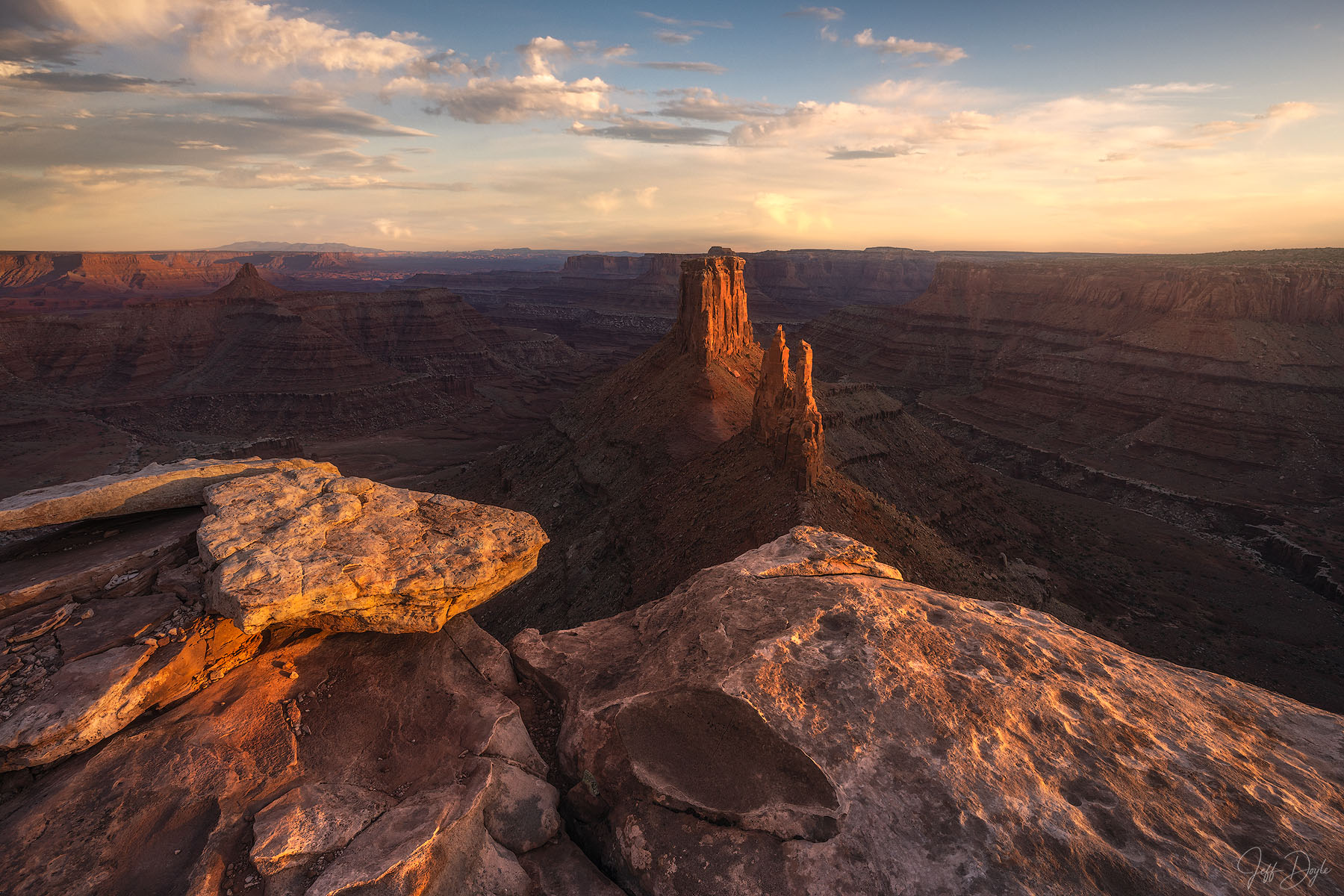
What makes fine art photography valuable to collectors goes beyond scarcity or the physical print itself. Fine art landscape photography sits in a specific position among collectible art forms. It requires the physical presence of the photographer in places that are often remote, seasonal, and uncontrollable. The conditions that make an image cannot be staged or recreated: light, weather, atmosphere, the interaction of all three at a particular moment. They happen, or they don't. My own work returns to the same regions across seasons: the Pacific Northwest coast, the Canadian Rockies, Colorado's high country, and the red rock canyons of the Desert Southwest.
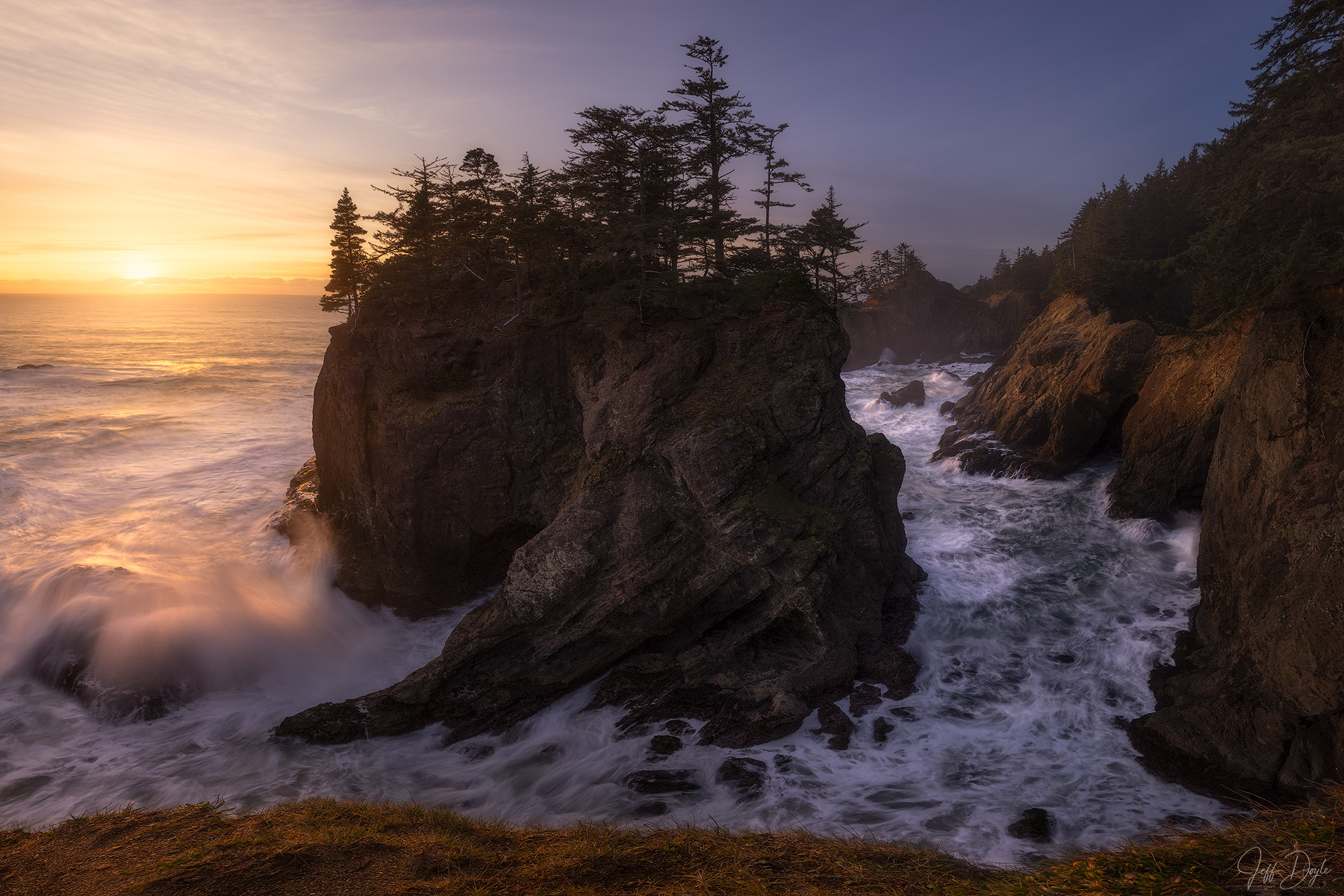
The image I call “Where the Coast Burns Gold” required five separate trips to Natural Bridges in Samuel H. Boardman State Scenic Corridor before it came together. Each of the earlier visits failed for a different reason: the light arrived flat, or the ocean was calm when I needed it violent. What I was waiting for was a January storm with enough swell to push waves to the top of the sea stacks, combined with the kind of coastal light that only appears when a storm is breaking and clearing simultaneously. On the fifth trip, it happened. The waves crested the rock. The sky opened and I had about twenty minutes before the shot disappeared.
Collectors who understand that process see the work differently, as a record of patience and commitment to a specific place rather than a beautiful image alone. That said, I’d rather the photograph do the work than the backstory. The best images hold attention on their own. The story behind them is a second thing to find, not the first.
Fine Art Photography as Interpretation, not Documentation
There’s a claim made about photography that images should be neutral, objective, and uninterpreted, and I want to push back on that because I think it actually undersells the medium. The idea that a photograph should be just a direct record of a moment misrepresents what landscape photography is.
Every image in this collection reflects choices: where to stand, when to be there, what focal length compresses or expands the scene, how the tonal range of the final print shapes the mood of the image. Ansel Adams wrote that the negative is the score and the print is the performance. I’d go further; the decision to return to a place a fifth time because the first four visits produced nothing you believed in is also part of the work. Photography is interpretive from the first moment to the last. What it preserves is a moment as seen.
How Fine Art Photography Transforms a Room Over Time
One thing I hear consistently from collectors is that their favorite pieces are the ones that continue to reveal themselves. Images that feel quiet at first but grow richer over time. This is partly a function of subject matter, as landscapes tend to reward sustained attention more than immediately striking images, and partly a function of how photographs respond to changing light throughout the day.
When a print catches morning light differently than afternoon light it stops behaving like an object and starts behaving like a view. Highlights soften, shadows deepen, and the tonal relationships in the image shift in ways that genuinely feel atmospheric. Large-scale landscape photographs in particular anchor rooms because they create depth and calm that reshapes how a space is used without calling attention to itself. However, none of that works if the size and viewing distance are wrong so it's important to think about what size image will work best before purchasing.
Limited Edition Prints and Archival Materials
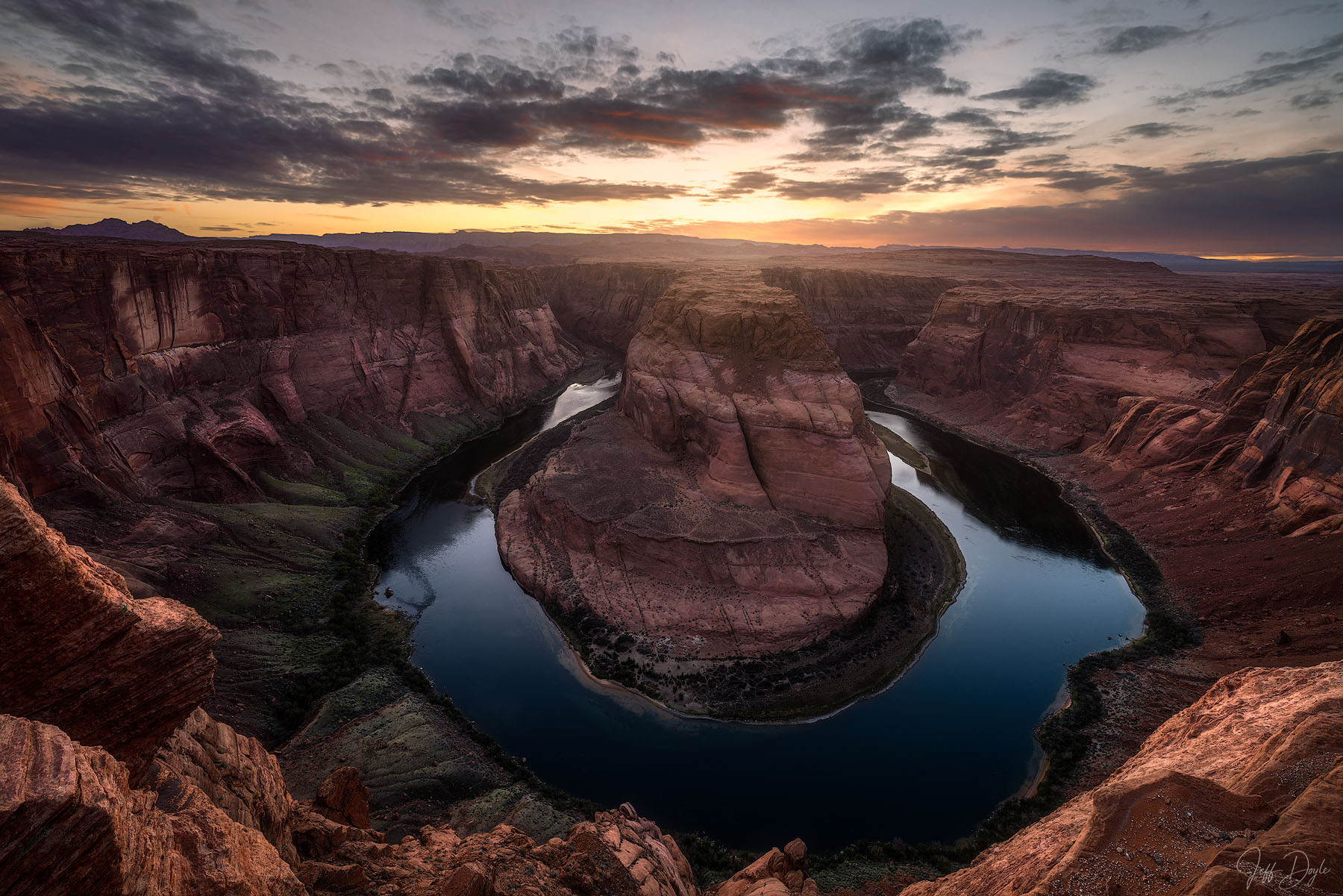
Understanding edition structure and print materials is an important part of collecting fine art photography with confidence. Every print in this collection is produced on archival materials using pigment inks, and I stay closely involved in production. Each image is a limited edition of 100 across all sizes and substrates, which is part of what gives the work its long-term standing. The full breakdown of edition structure, print substrates, and what each material is suited for is covered in detail in the post on Editions, Sizes, and Materials and is worth reading before you make a decision, particularly if you’re choosing between paper, metal, and acrylic for a specific space.
How to Buy Fine Art Photography with Confidence
When collectors ask me what they should be looking for, the questions are usually practical: Will this still feel relevant in ten years? How will it age? Does it belong in this space?
My honest answer to the first two questions is that images chosen because they genuinely resonate hold up. Trend-driven choices don’t. The emotional connection is the most reliable long-term indicator. It's more reliable than price point, edition size, or any external signal of value. I’ve watched collectors return years later still deeply connected to work they bought because something in it was true for them. That doesn’t happen by accident, and it doesn’t happen with work chosen to impress.
The practical side matters too. Professional production, proper materials, and careful installation protect the investment and ensure the work looks right for as long as you own it. But the foundation is the choice itself. Work that belongs in your life will keep earning its place on the wall. Work that doesn’t will quietly stop making sense over time.
How to Start Collecting Fine Art Photography
The most meaningful collections are built slowly. There’s no correct order, no required entry point, and no reason to hurry. If you’re new to collecting photography, the most useful thing I can tell you is to buy something that you find yourself thinking about after you’ve stopped looking at it. That’s the test that holds up.
If you have questions about specific pieces, edition status, sizing, or materials, I’m reachable directly. I’d rather answer questions before a purchase than have collectors feel uncertain after one.
Frequently Asked Questions About Collecting Fine Art Photography
Is fine art landscape photography a good investment?
Limited edition landscape photography can appreciate over time when the edition structure is clear, the artist's reputation is established, and the work is professionally produced. Each image in this collection is limited to 100 prints across all sizes and substrates, with a signed Certificate of Authenticity.
What should I look for when buying fine art photography?
Look for a clear limited edition policy, archival production standards, a Certificate of Authenticity, and personal connection to the image. Practical decisions like sizing and materials and framing also shape the final experience.
Why is landscape photography popular with collectors?
Landscape photography captures universal experiences such as light, weather, seasons, and place in ways that connect personally without requiring explanation. The best images reward sustained attention and grow richer over time.
What makes fine art photography different from a regular print?
Fine art photography is produced on archival materials in limited editions, with each print signed, numbered, and accompanied by a Certificate of Authenticity. The image itself reflects the photographer's artistic vision and accompanying decisions that interpret a scene rather than simply document it. A regular print has no edition control, no archival guarantee, and no provenance.
How do I know if a fine art photograph will hold its value?
Scarcity you can verify, and an artist who stands behind the work: a documented edition policy, archival production, and a consistent body of work over time. The strongest long-term indicator, though, is personal connection. Photographs chosen because they genuinely resonate hold their place on the wall, and in value, far longer than trend-driven purchases.
Is fine art photography better as an investment than painting?
Fine art photography and painting serve different roles in a collection. Photography offers accessibility at a broader range of price points while still providing genuine scarcity through limited editions. The market has momentum too: Deloitte Private's report on the 2025 photography market found sales at the major international auction houses grew roughly 19 percent year over year, with multiple works topping $1 million. For most collectors, the strongest approach is still to buy what you connect with.
How do I start a fine art photography collection?
Start by buying something you find yourself thinking about after you've stopped looking at it. There's no correct order, no required entry point, and no reason to hurry. If you're drawn to landscape photography, spend time exploring different regions, styles, and photographers until you find work that resonates.
What makes fine art photography valuable?
Fine art photography derives value from the strength of the image, the photographer's artistic vision, scarcity, provenance, and the quality and longevity of the finished print. Limited editions create verifiable scarcity, while archival materials and a Certificate of Authenticity help establish the work as a collectible object. For the collector, however, lasting value also comes from choosing a photograph that continues to hold personal meaning over time.