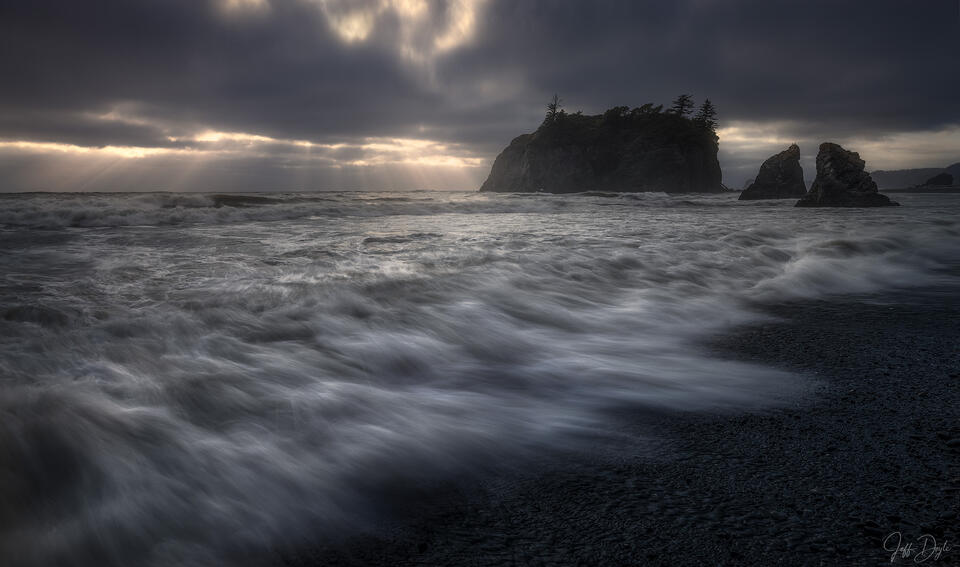
Sea Stacks, Tidepools, and Coastal Drama
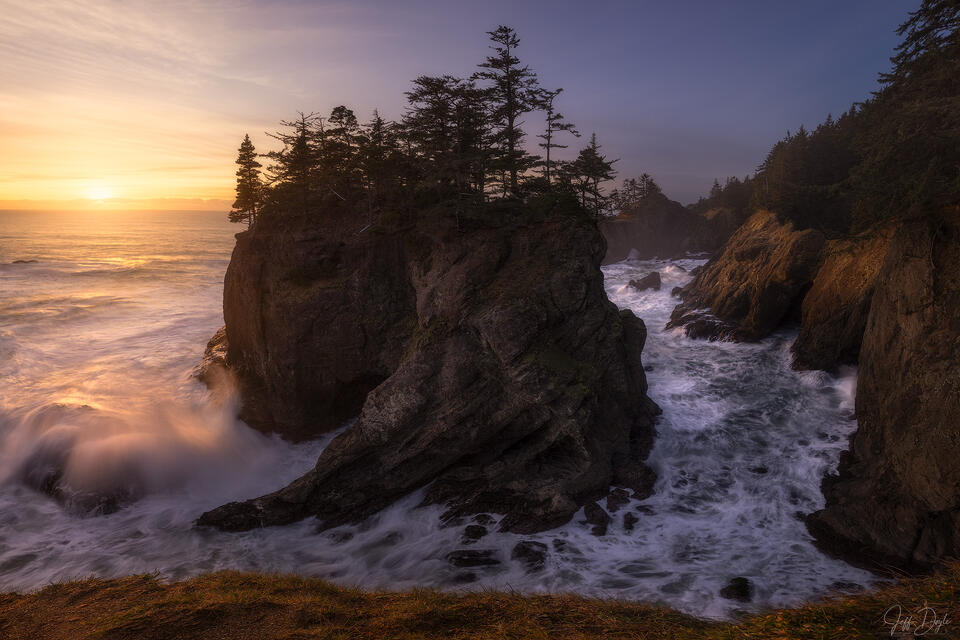
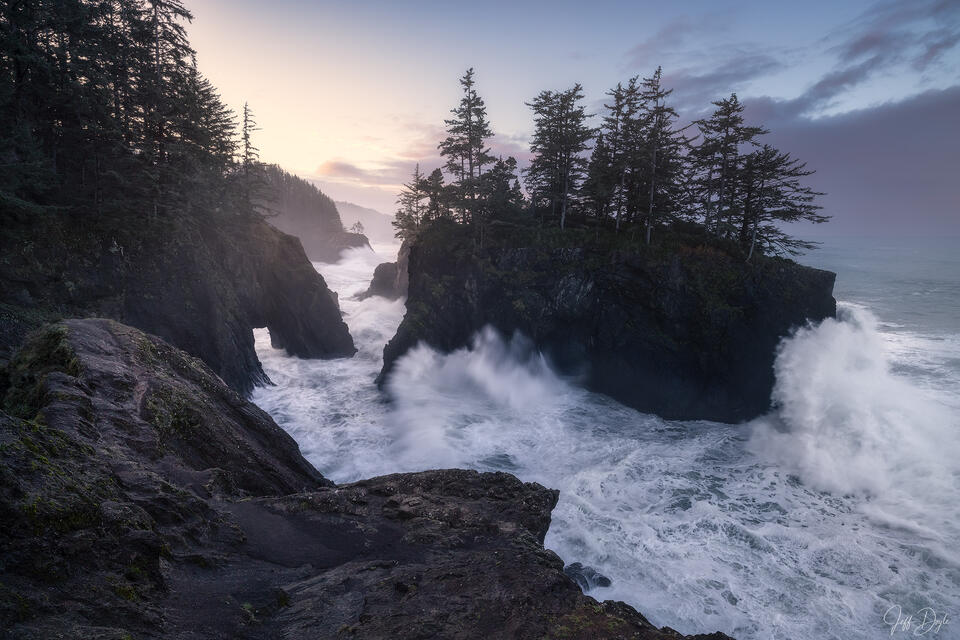
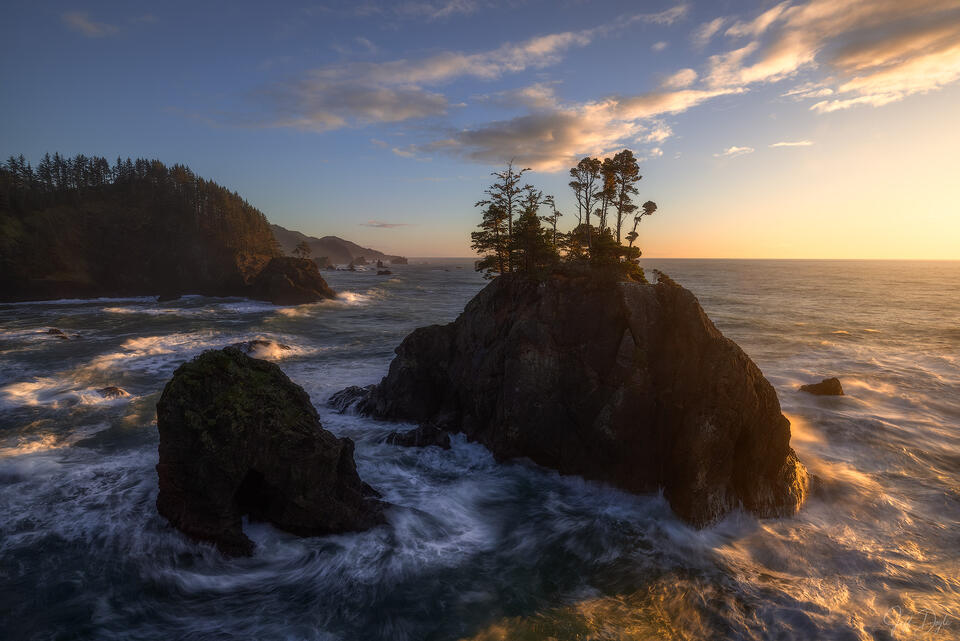
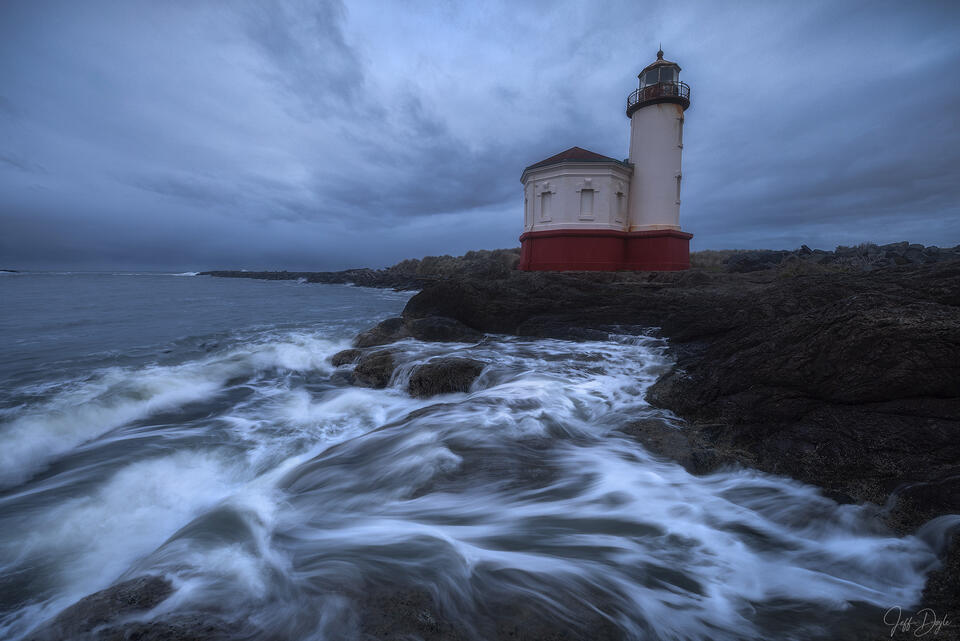
The Pacific coastline is constantly changing. Tides reshape the shoreline, clouds soften or break the light, and no two evenings look the same. From Oregon’s rocky headlands to Washington’s open beaches, each photograph in this collection reflects a specific moment shaped by weather, water, and timing. Some scenes are dramatic, with bold color and strong wave action, while others are quieter, with pastel skies settling over tidepools and calm water.
Standing at the edge of the ocean during sunset is a deeply immersive experience: the crash of waves, the scent of salt in the air, and the gradual unfolding of color across the horizon. My goal is to photograph these moments as they unfold, preserving the balance between motion and stillness that defines the shoreline in the evening hours.
Photographing a Coastline in Constant Motion
Coastal landscapes rarely stay still for long. A composition that works at one tide may disappear at another, and a foreground of wet sand, reflected sky, or exposed rock can change within minutes. Waves continually alter the relationship between water and shoreline, while wind and clouds determine how much light reaches the scene.
That unpredictability is part of what makes coastline photography compelling. Some photographs depend on the energy of incoming surf, while others come together during quieter conditions when tidepools, reflections, and distant sea stacks become more prominent.
Oregon and Washington Coastal Landscapes
Much of this collection comes from the Pacific Northwest, where the Oregon and Washington coasts combine open beaches, rocky headlands, offshore sea stacks, tidepools, and rapidly changing weather. Locations such as Rialto Beach can look completely different depending on tide, cloud cover, season, and the direction of the evening light.
These conditions create a wide range of coastal photographs—from expansive seascapes built around horizon and sky to more intimate compositions where water moves through rock, sand, and reflected light.
Sunset, Twilight, and Changing Coastal Light
Sunset is only one stage of evening light along the coast. Warm color may develop before the sun reaches the horizon, while some of the most subtle conditions arrive afterward as direct light fades and the sky moves toward twilight.
Strong sunsets can create dramatic contrast between illuminated clouds, dark sea stacks, and moving water. Quieter evenings often produce softer color and more restrained seascapes. Both are part of the changing character of the Pacific shoreline.
Fine Art Coastal Photography Prints
Each photograph is available as a signed limited-edition print on Lumachrome TruLife acrylic, ChromaLuxe metal, or cotton rag fine art paper. For more detail about edition sizes, print sizes, and collectibility, see the guide to editions, sizes, and materials.
Explore Related Landscape Photography
Coastal landscapes connect naturally with several other collections. Explore waterfall photography for another expression of moving water, mountain photography for broader elevation and scale, autumn landscapes for seasonal color, or wildflower photography for landscapes shaped by shorter seasonal moments.
Help Choosing the Right Piece
If you would like help selecting the right image or size for your space, you are welcome to reach out directly. For general advice about sizing, orientation, and placement, see the guide to choosing fine art photography for your space.