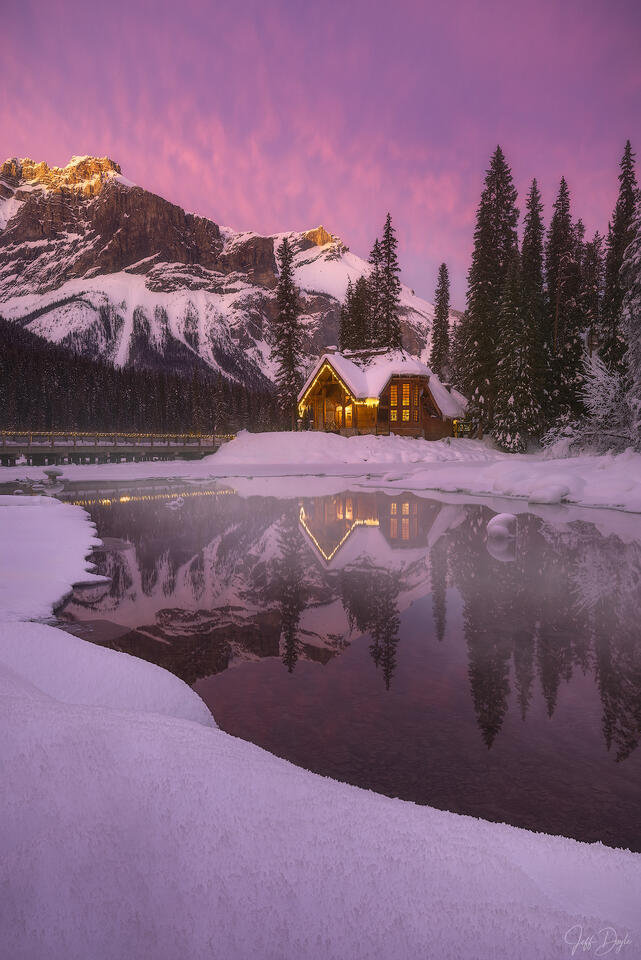
Winter Photography in Banff and the Canadian Rockies
No place does winter like the Rockies. I've spent weeks of my life returning here during the cold months—to Morant's Curve when fresh snow sits on the rail grade and the mountains beyond go blue in the last light, to Abraham Lake when methane bubbles freeze into suspended formations beneath crystal-clear ice, and to Bow Lake when the frozen surface catches alpenglow and holds it for a few minutes before the color shifts and disappears.
What continues to draw me back is how rarely the landscape repeats itself. Snowfall, ice formation, and shifting weather constantly reshape the scene. A location I have visited many times can still offer something entirely new when the conditions align. The absence of crowds adds to the experience, creating space to slow down and observe what unfolds in front of me.
While this collection includes winter landscapes from across the Pacific Northwest and other alpine regions, Banff and the surrounding Canadian Rockies remain central to it. Many of these photographs were shaped by the cold, changing light, and unpredictable conditions of winter in the mountains.
Snow, Ice, and Changing Winter Conditions
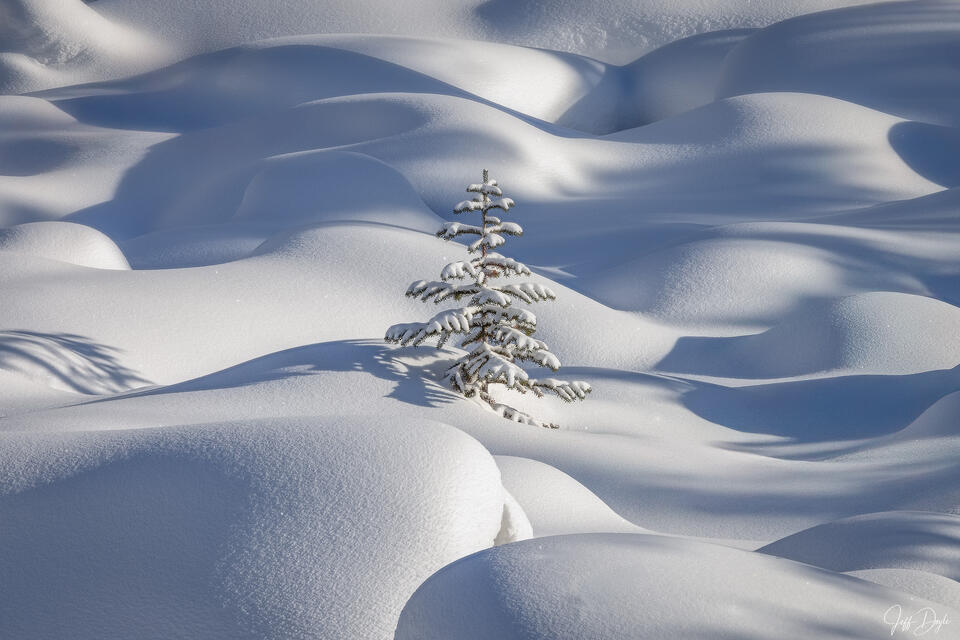
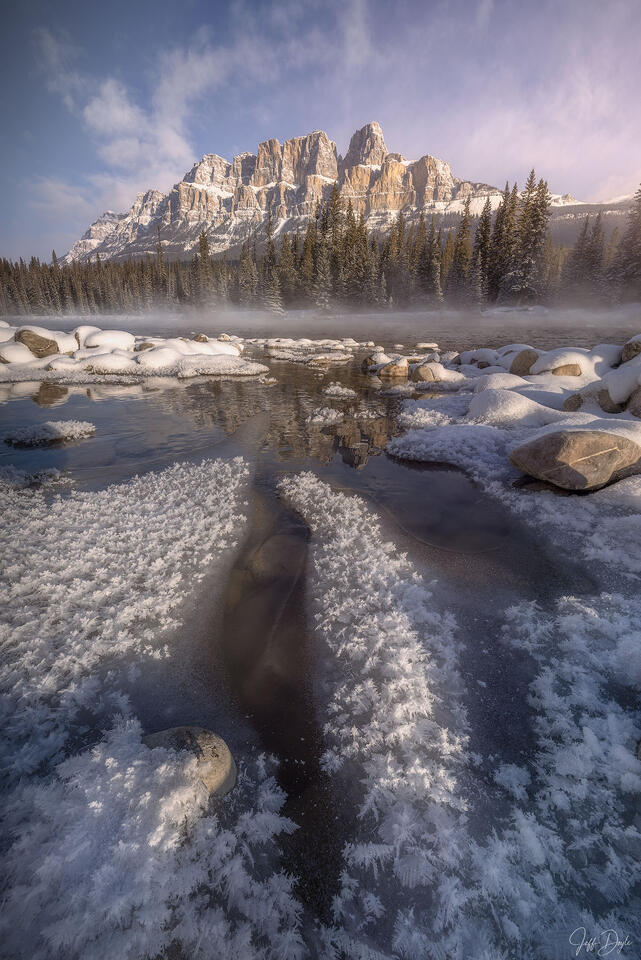
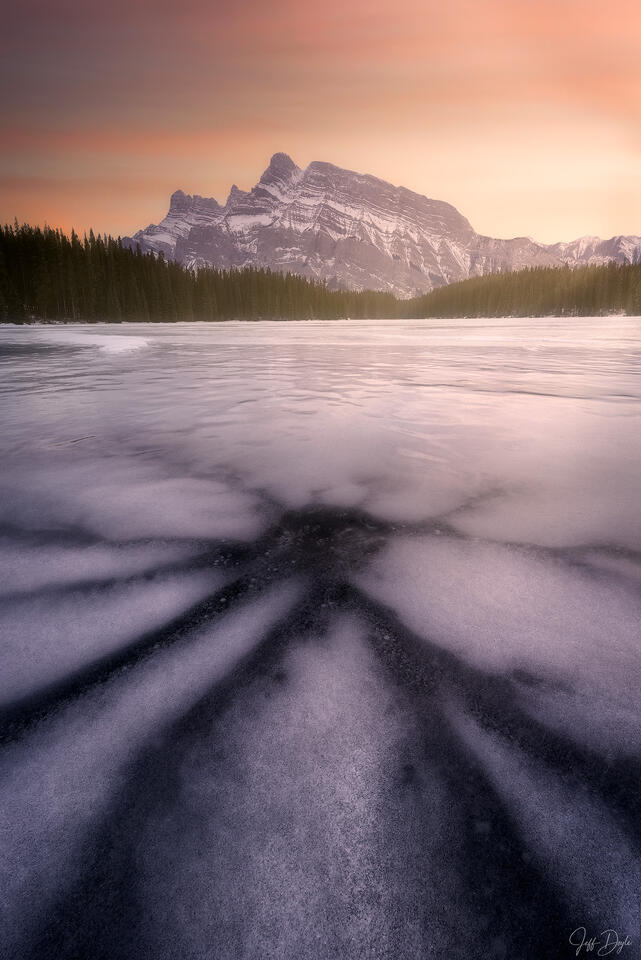
Winter simplifies landscapes while changing them constantly. Fresh snow can soften forests and cover familiar details overnight, while wind exposes ridgelines and reshapes drifts. Lakes move from open water to clear ice, snow-covered ice, and fractured surfaces as temperatures and weather change through the season.
Those changes make timing especially important. A winter landscape may depend on fresh snowfall, clear ice, low cloud, or a brief break in the weather when light reaches a mountain or frozen lake. Returning to the same places under different conditions is often what makes the photograph possible.
Soft Light and High-Contrast Winter Scenes
Some winter photographs depend on subtle tonal differences, where snow, cloud, and sky blend into a quiet range of whites, blues, and grays. Others rely on stronger contrast, with dark forests, exposed rock, directional light, or alpenglow separating elements within the landscape.
Snow can reduce a complicated scene to shape, light, and texture, while ice introduces its own patterns and reflections. Those changing relationships are part of what makes snow landscape photography different each time conditions shift.
Fine Art Winter Landscape Photography Prints
Each photograph is available as a signed limited-edition print on Lumachrome TruLife acrylic, ChromaLuxe metal, or cotton rag fine art paper. For more detail about edition sizes, print sizes, and collectibility, see the guide to editions, sizes, and materials.
Explore Related Landscape Photography
Winter landscapes connect naturally with several other collections. Explore mountain photography for high-country landscapes across a broader range of seasons, waterfall photography for moving water in forested and mountain environments, or night sky and Milky Way photography for landscapes photographed after dark.
Help Choosing the Right Piece
If you would like help selecting the right image or size for your space, you are welcome to reach out directly. For general advice about sizing, orientation, and placement, see the guide to choosing fine art photography for your space.