Milky Way and Night Sky Photography
Photographing the night sky blends technical precision with a sense of wonder. Long exposures reveal faint detail that is difficult to see with the naked eye, but the process begins well before darkness. I'm often working with a composition scouted hours earlier, then returning after sunset and navigating the scene in near-total darkness while making careful decisions about focus, exposure, and the relationship between the stars and foreground landscape.
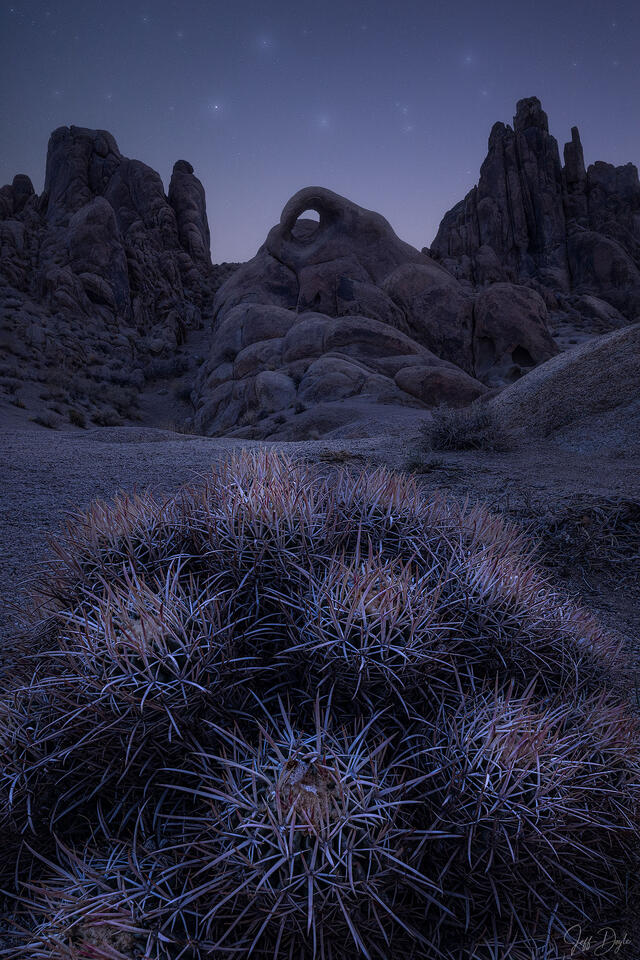
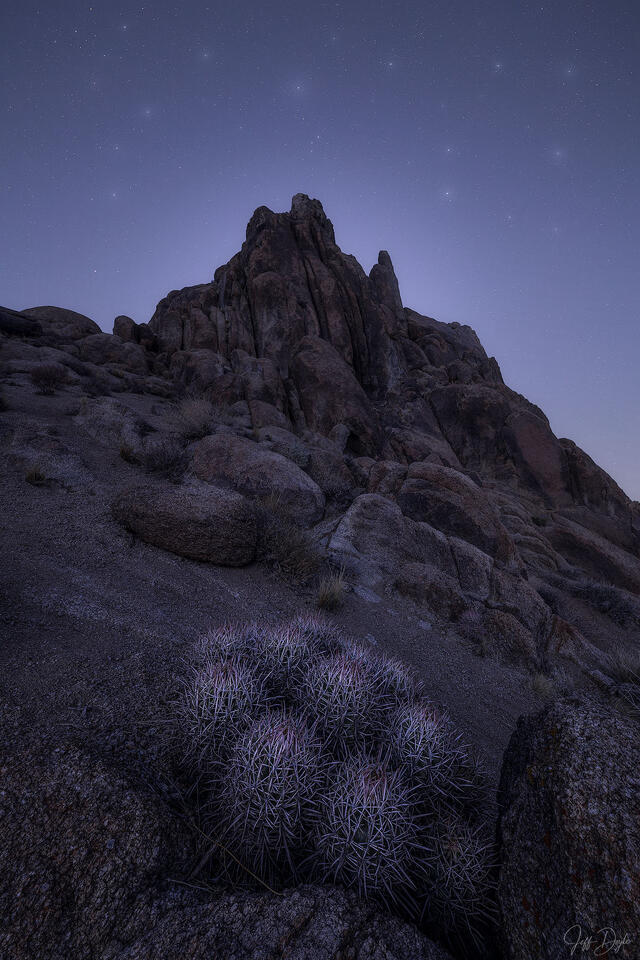
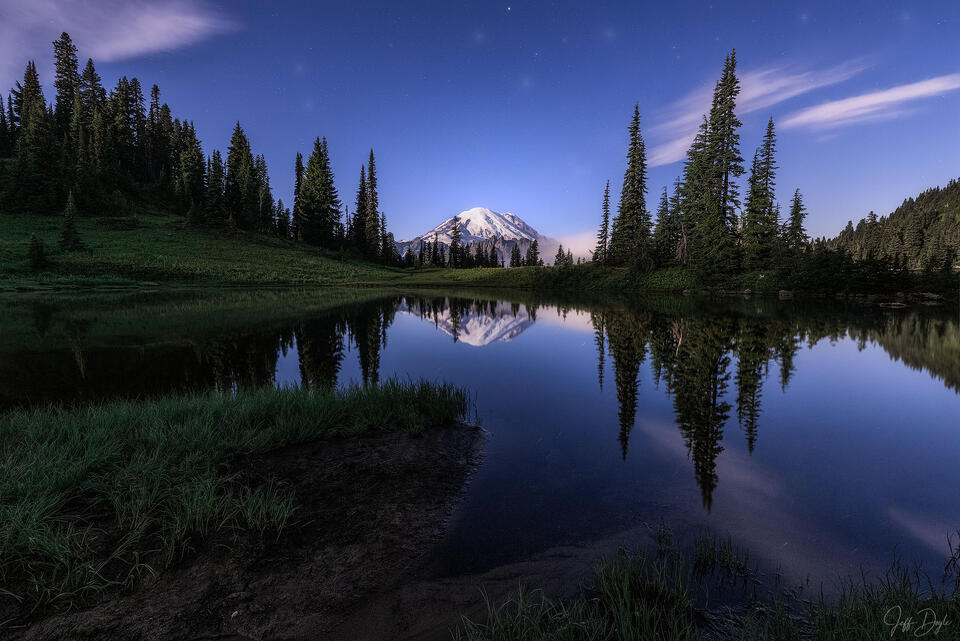
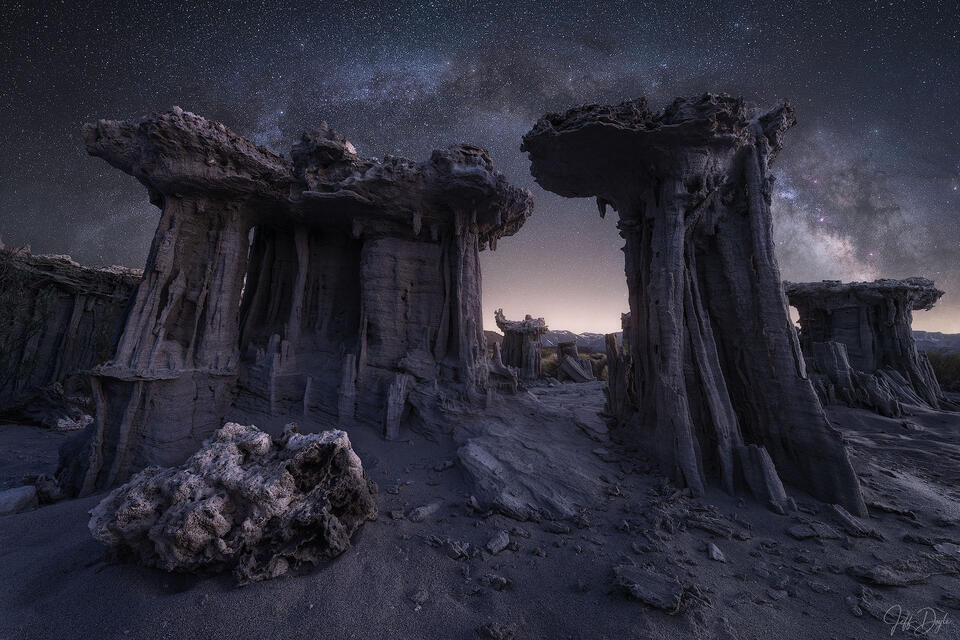
Images in this gallery were created across the Pacific Northwest, the high deserts of the American Southwest, and the alpine wilderness of the Rockies—places where dark skies, elevation, and distinctive terrain allow the night sky to become part of the landscape rather than simply a background.
Building a Starscape Around the Landscape
For me, astrophotography is still landscape photography. The Milky Way may dominate the sky, but the foreground gives the photograph its sense of place. Mountains, desert arches, lakes, rock formations, and other natural features create scale and connect the celestial scene to the landscape below.
Planning matters because the position of the Milky Way changes through the night and across the season. A composition depends not only on dark skies, but also on how the stars align with the land, what light remains on the horizon, and whether weather or atmospheric conditions allow the scene to come together.
Twilight, Starlight, and the Milky Way
Some photographs in this collection are made during twilight, when the landscape still holds subtle detail and the sky shifts through violet, blue, and indigo before full darkness. Others are created later, when stars become more prominent and the Milky Way forms the primary structure of the sky.
Those conditions create very different photographs. Twilight tends to preserve a stronger relationship between land and sky, while deeper darkness can reveal dense star fields and celestial detail that remain invisible earlier in the evening.
Fine Art Astrophotography & Milky Way Prints
Each photograph is available as a signed limited-edition print on Lumachrome TruLife acrylic, ChromaLuxe metal, or cotton rag fine art paper. For more detail about edition sizes, print sizes, and collectibility, see the guide to editions, sizes, and materials.
Explore Related Landscape Photography
Night sky photography connects naturally with several other landscape collections. Explore American Southwest photography for the desert arches, canyons, and open landscapes photographed under daylight and changing weather, mountain photography for alpine landscapes across a broader range of conditions, coastal photography for the transition of evening light along the Pacific shoreline, or winter landscape photography for snow and ice under seasonal light.
Help Choosing the Right Piece
If you would like help selecting the right image or size for your space, you are welcome to reach out directly. For general advice about sizing, orientation, and placement, see the guide to choosing fine art photography for your space.