What Is a Landscape? Meaning in Photography, Art & Nature
A landscape is the visible character of a place, including the landforms, water, vegetation, weather, light, and sometimes human-made features that give an area its distinct appearance. In photography and art, though, a landscape is more than a collection of physical features. It is also an interpretation of a place.
Two photographers can stand in exactly the same location and create completely different images. One may emphasize the scale of a mountain range, another may notice a small line of autumn trees, and a third may wait until fog hides most of the scene and transforms a familiar place into something mysterious.
That is one of the reasons I have always found landscape photography so compelling. The landscape itself matters, but so does the way we choose to see it.
Landscape Definition at a Glance
| Term | Simple Definition |
|---|---|
| Landscape | The visible features and character of an area |
| Natural landscape | A landscape shaped primarily by natural forces and features |
| Cultural landscape | A place whose visible character has also been shaped by people |
| Landscape art | Art in which a place, environment, or outdoor scene is a principal subject |
| Landscape photography | Photography in which the character of a place or environment is a primary subject |
| Landscape orientation | A horizontal image format that is wider than it is tall |
One important distinction is that “landscape” can describe both a subject and an image orientation. A photograph of a mountain can be a landscape even if the photograph is vertical, while a horizontal portrait of a person can use landscape orientation without being landscape photography.
The subject and the shape of the image are two different things. That distinction is simple, but it clears up a lot of confusion around the word.
What Is Landscape Photography?
Landscape photography is the photographic interpretation of a place, with the environment itself serving as one of the primary subjects of the image. That environment might be immense, such as a mountain range, desert basin, coastline, canyon, forest, or open plain. It can also be much smaller and more intimate.
A small section of a river, a group of trees in fog, patterns in sandstone, or reflected light on water can still communicate the character of a landscape without showing an enormous panoramic view. For me, this is an important distinction because landscape photography is not simply about fitting as much scenery as possible into the frame.
It is about deciding what matters within a place and arranging those elements in a way that communicates something about the experience of being there. Sometimes scale matters, sometimes color matters, and sometimes weather changes everything. In other cases, the strongest landscape photograph is the one that leaves most of the landscape out.
What Makes a Photograph a Landscape Photograph?
There is no rule requiring every landscape photograph to contain mountains, trees, rivers, or a dramatic sunset. The better question is what is the photograph actually about?
If the primary subject is the place itself, including its form, atmosphere, light, weather, geology, vegetation, or the relationship between those elements, I would generally consider it landscape photography. That leaves room for a surprising amount of variety.
A landscape photograph might include:
- mountains and alpine valleys
- deserts and sandstone formations
- waterfalls and rivers
- coastlines and sea stacks
- forests and autumn foliage
- grasslands and agricultural patterns
- snow and ice
- wildflowers
- night skies above the land
- roads, fences, cabins, or other human elements
- cities or structures when the surrounding place remains central to the image
A person can even appear in a landscape photograph without turning the image into a portrait. A small human figure may provide scale, context, or a sense of our relationship with a much larger environment.
What Is a Landscape in Art?
In art, a landscape is a representation or interpretation of a place, usually with the surrounding environment as the principal subject. For centuries, artists have interpreted mountains, forests, fields, rivers, coastlines, villages, and other environments through painting, drawing, printmaking, and eventually photography.
The important word is interpretation. A landscape artist does not simply reproduce everything that exists in front of them. Decisions about composition, perspective, color, light, scale, emphasis, and omission all influence what the viewer ultimately experiences.
Photography works the same way. A camera records light from the physical world, but the photograph is still shaped by a long series of choices made by the photographer. Where do I stand, what do I include, what do I exclude, and how long do I wait?
I also have to decide whether to photograph the scene under clear skies, incoming weather, snowfall, twilight, or the last light of the day. Those choices are part of what turns a place into a photograph.
If you are interested in how photography became part of the larger artistic tradition of representing the natural world, I explore that in more depth in The History of Landscape Photography: How Art Shaped the Way We See.
Natural Landscapes and Cultural Landscapes
Not every landscape is untouched wilderness. A natural landscape is dominated by features and processes we associate with the natural environment, including mountains, rivers, forests, coastlines, deserts, glaciers, plains, and similar settings.
A cultural landscape reflects the interaction between people and the land. That might include farmland, vineyards, rural roads, historic settlements, terraces, gardens, ranchlands, towns, architectural features, and working agricultural landscapes.
The distinction is useful, but the real world does not always divide neatly into one category or the other. Many of the landscapes we think of as natural have been influenced by people in some way, while many human-shaped landscapes remain deeply connected to underlying geology, climate, vegetation, and water.
From a photographer's perspective, that overlap can be visually interesting. A winding road through a desert, a farmhouse surrounded by rolling fields, or a fence disappearing into snow may reveal as much about our relationship with a place as a completely undeveloped scene.
The Main Types of Landscapes
There are countless ways to classify landscapes, but photographers tend to encounter several broad visual families again and again. Each one presents its own challenges, patterns, and opportunities for composition.
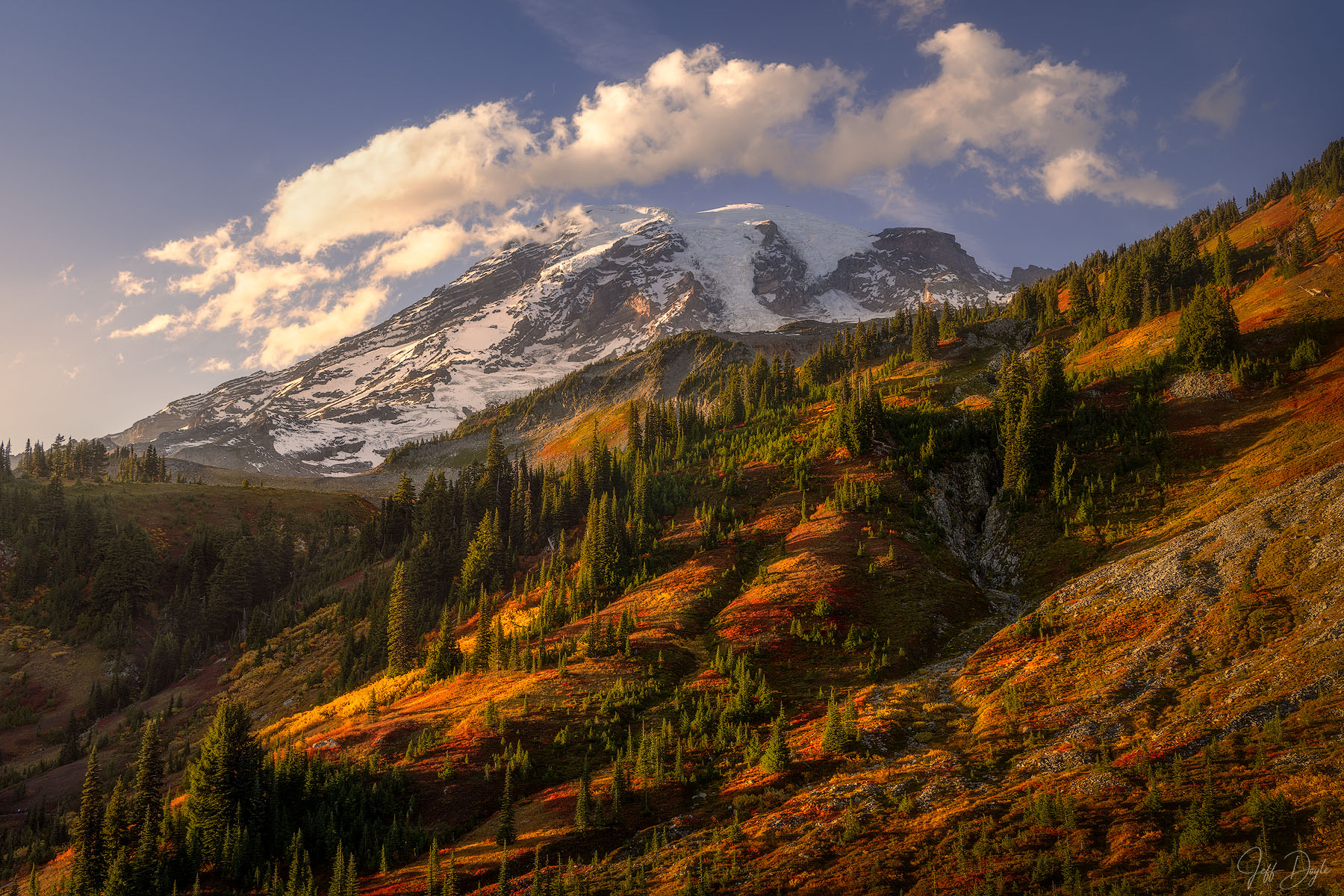
Mountain Landscapes
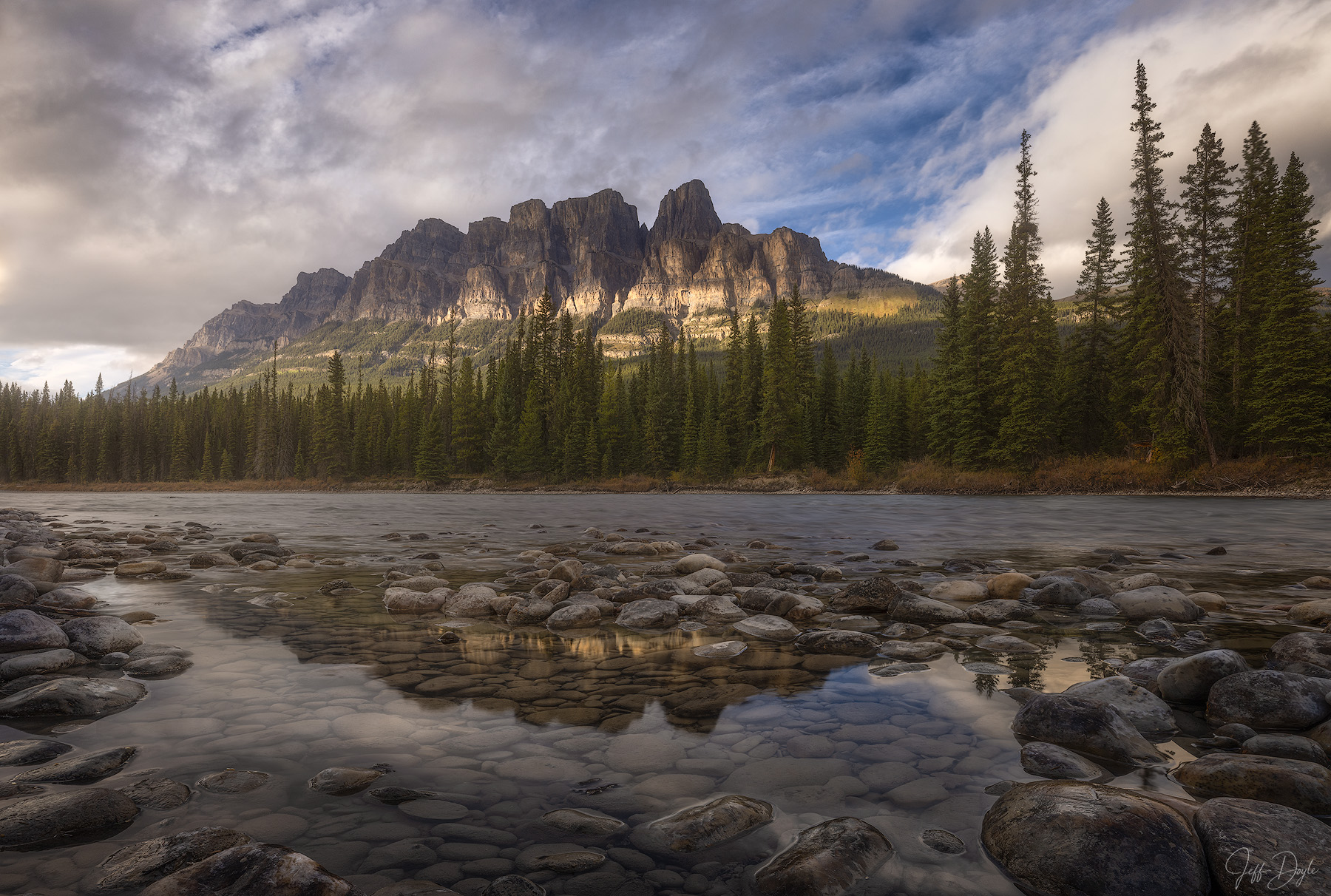
Mountains naturally create a sense of scale. Peaks, ridgelines, alpine valleys, cliffs, snowfields, changing weather, and strong differences in elevation can all create powerful visual structure.
Mountain photography is not only about dramatic summits, though. Sometimes the most interesting part of a mountain landscape is the relationship between foreground and distance, such as wildflowers below a ridge, light moving across a valley, autumn color against rock, or fog partially concealing the peaks.
You can see examples in my Fine Art Mountain Photography Prints gallery.
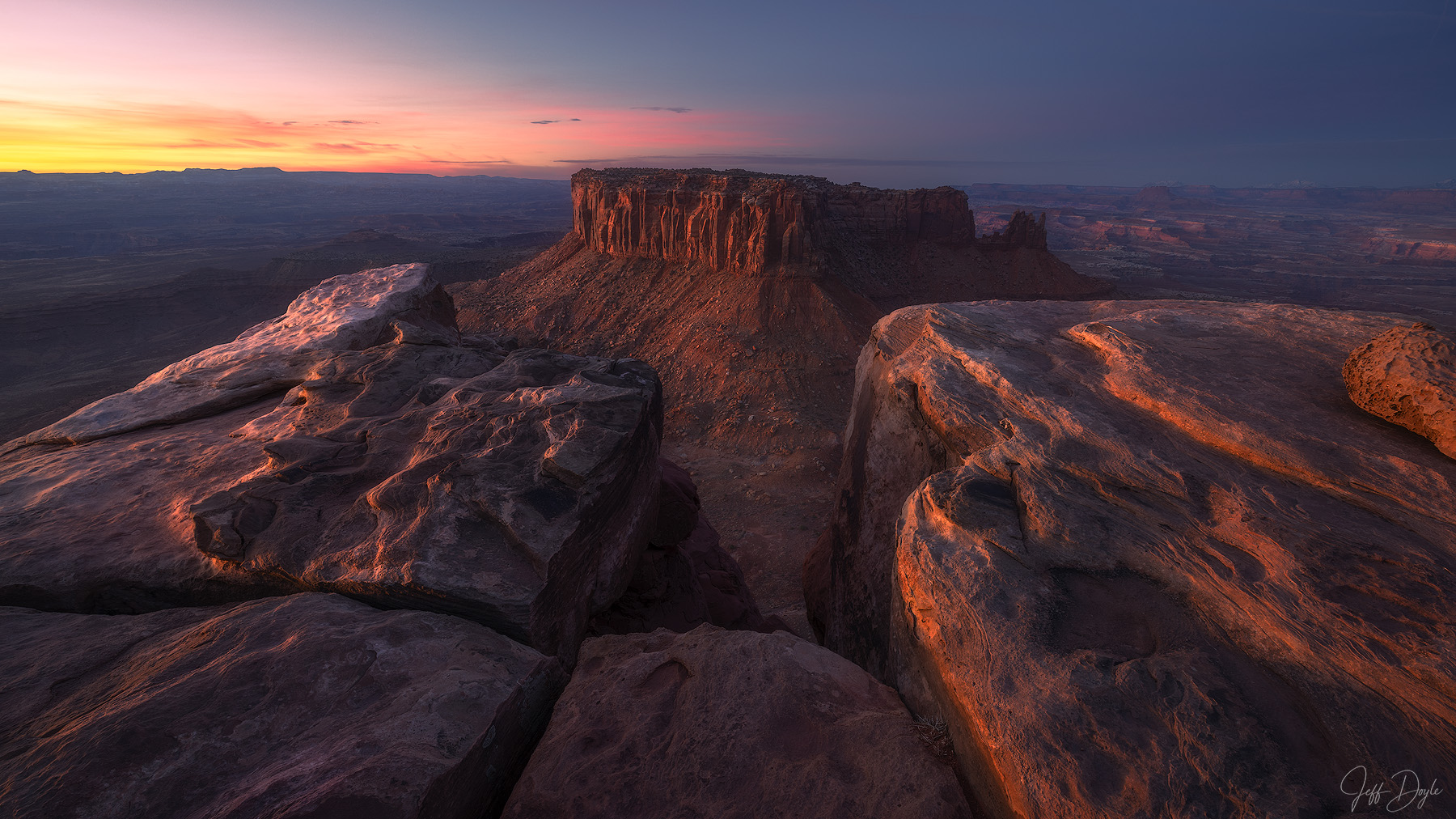
Desert Landscapes
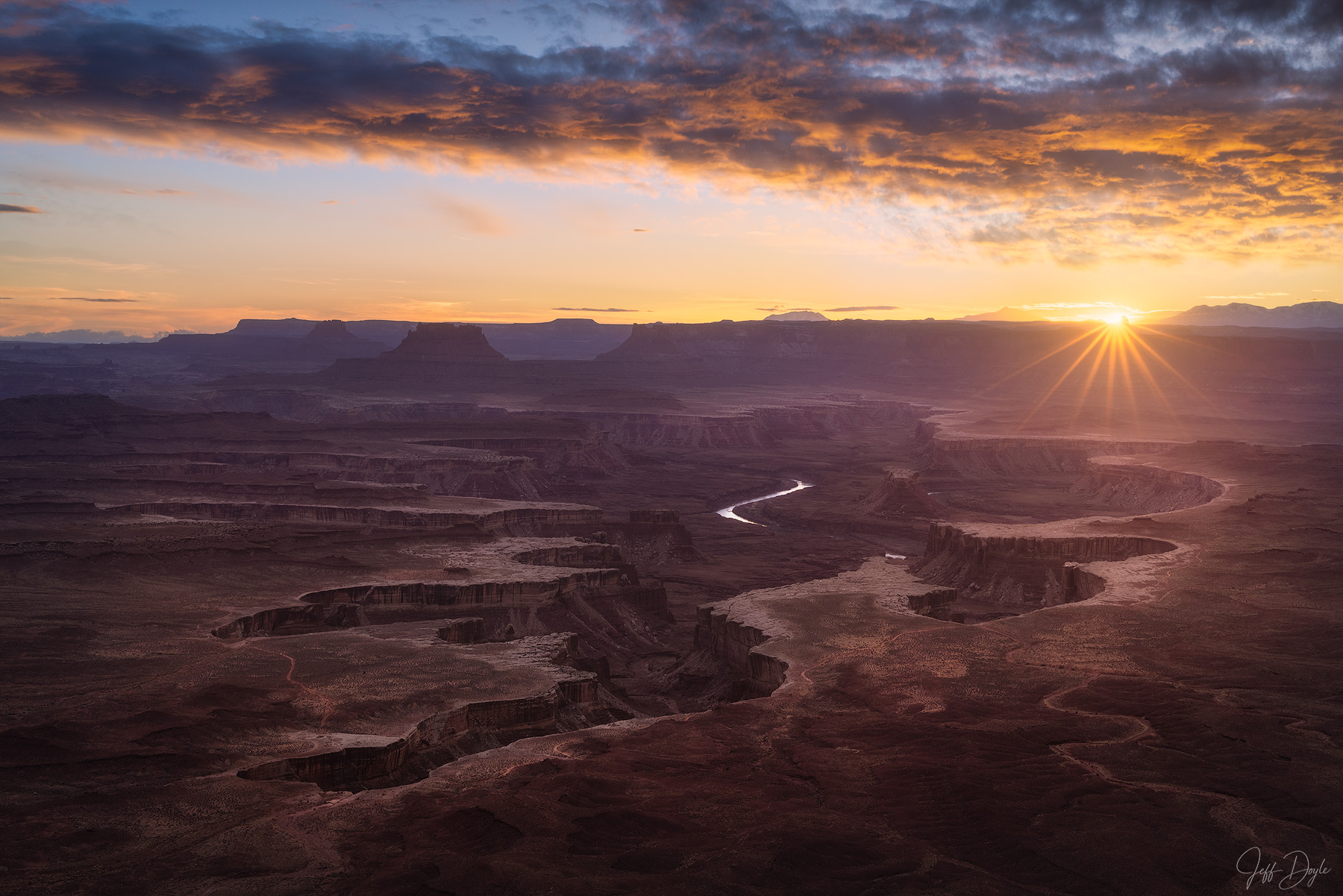
Deserts can appear empty at first glance, but visually they are often extraordinarily complex. Sandstone, canyon walls, dunes, mesas, badlands, dry washes, mineral color, sparse vegetation, and enormous open spaces can create strong patterns and shapes.
Light can also change desert landscapes very quickly. A formation that looks relatively flat under midday light may reveal layers of texture and depth when the sun is lower and begins to move across the contours of the land.
My American Southwest Landscape Photography Prints gallery explores many of these environments.
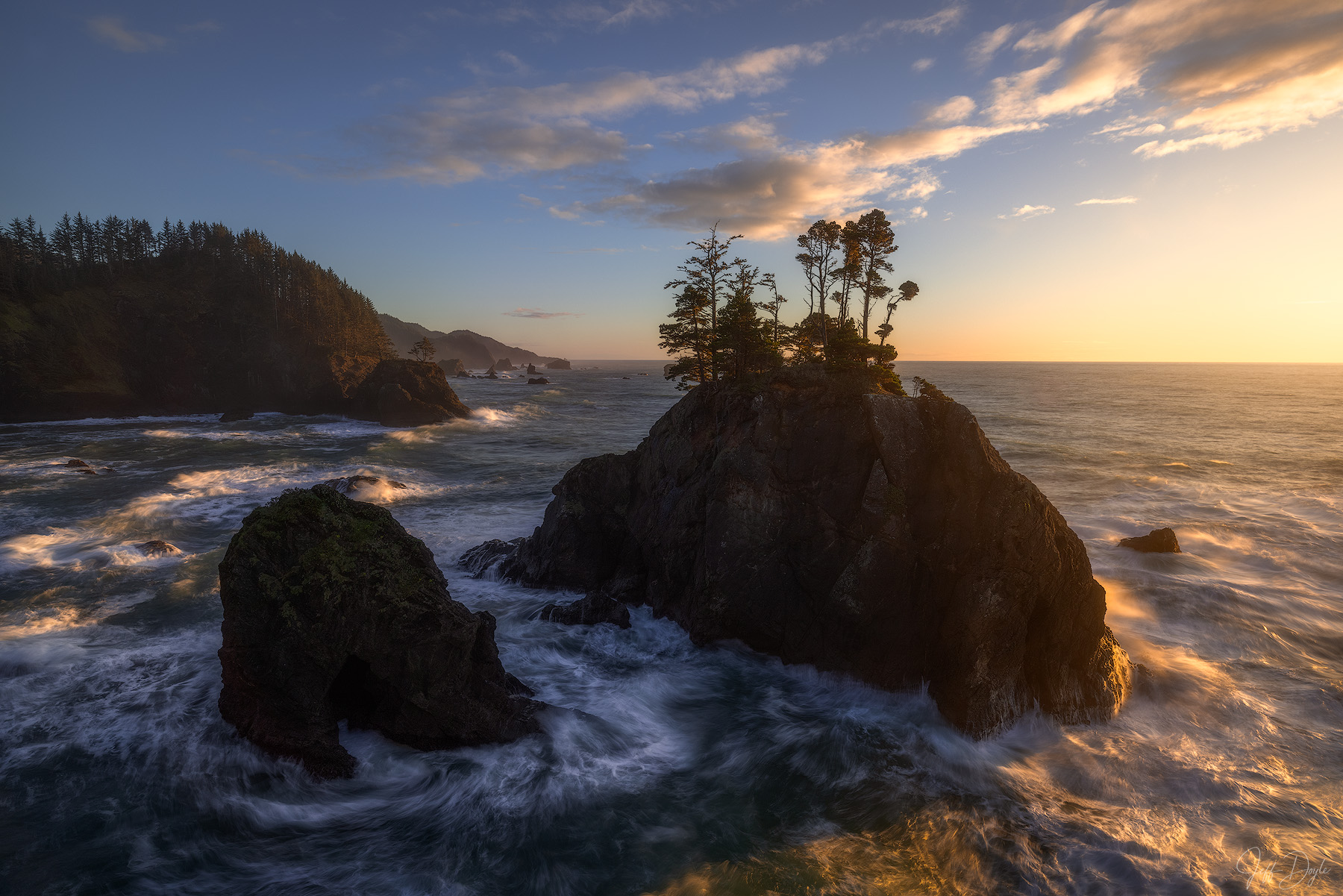
Coastal Landscapes
Coastal landscapes are shaped by the meeting of land and water. Sea stacks, cliffs, beaches, tidepools, surf, mist, changing tides, and reflected light all contribute to the character of a coast.
The landscape is constantly changing. A composition that works at one tide level may disappear at another, fog can erase distant features, and waves change shape from moment to moment. Twilight can also soften a scene that looked harsh only minutes earlier.
You can explore those environments in my Fine Art Coastal Photography Prints gallery.
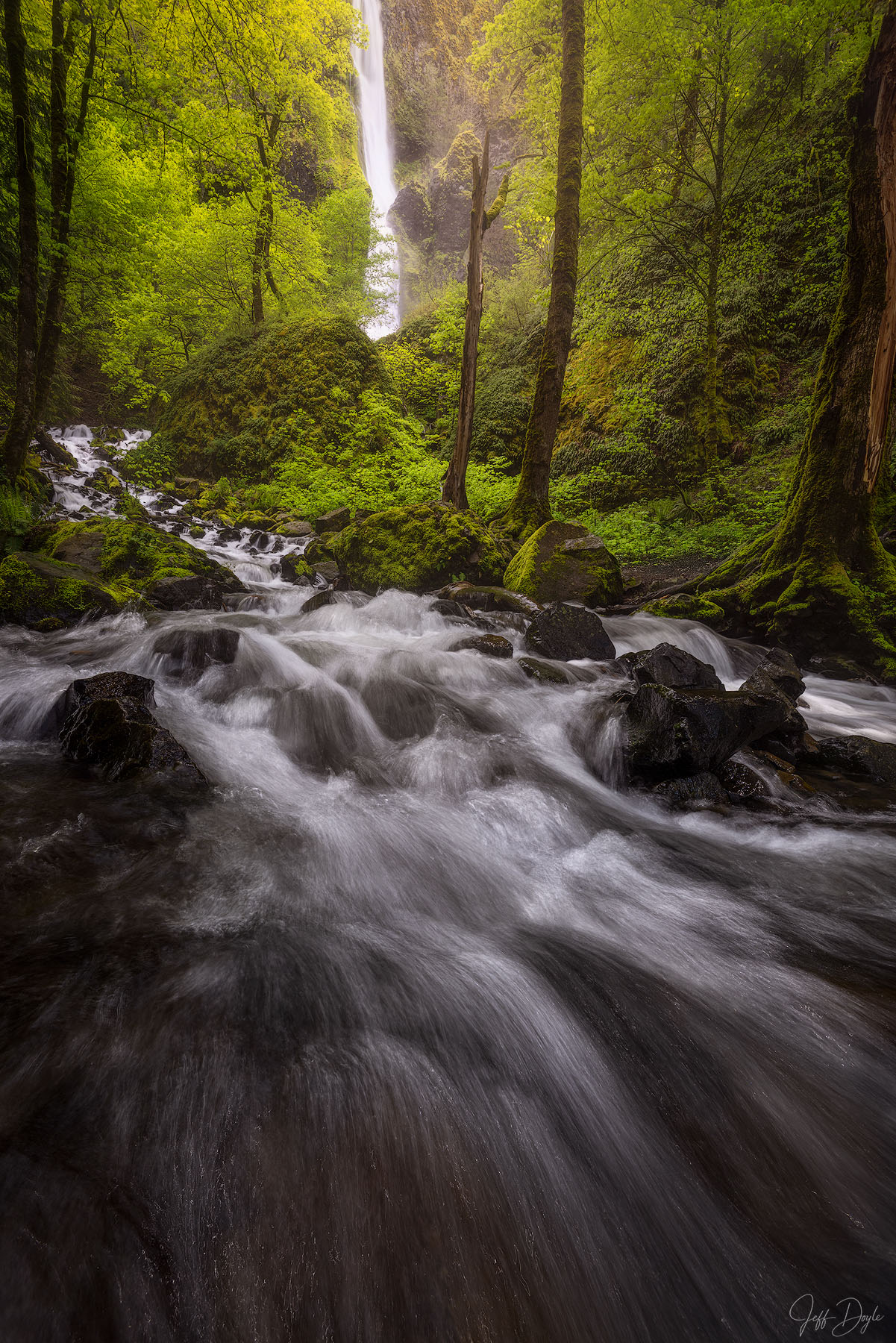
River and Waterfall Landscapes
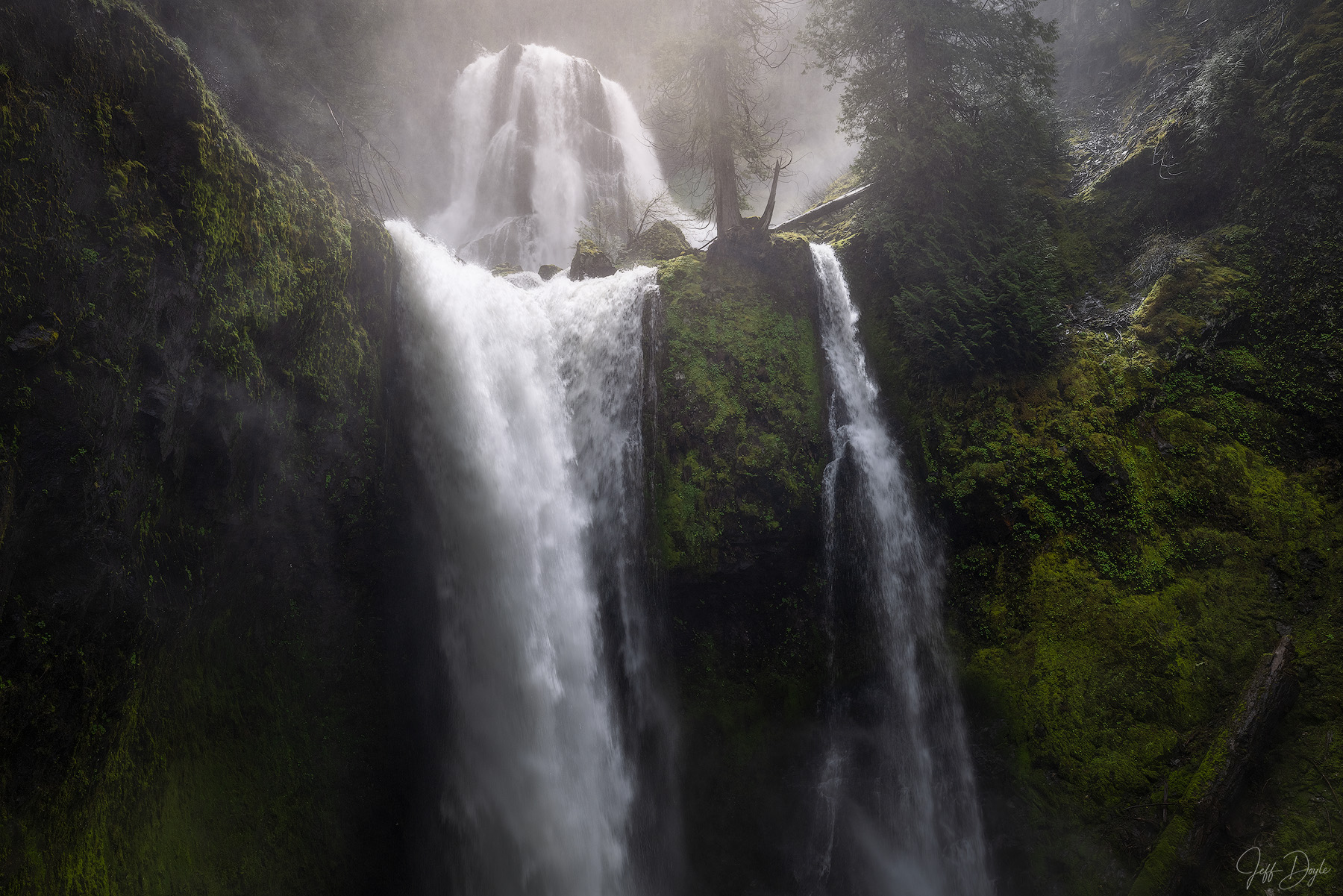
Water is one of the most active forces within a landscape. Rivers create lines through a scene, waterfalls add movement and energy, and pools or slower water can reflect surrounding rock, vegetation, and sky.
Photographically, water can also change the feeling of an image depending on how it is rendered. Fast shutter speeds can freeze spray and movement, while longer exposures can emphasize the flow and continuity of the water.
My Fine Art Waterfall Photography Prints gallery focuses on landscapes where falling and moving water play a central role.
Forest and Autumn Landscapes
Forests are often more visually complicated than wide-open landscapes. Trees overlap, branches intersect, and light breaks into smaller areas rather than illuminating the entire scene evenly.
That complexity can make composition more difficult, but it also creates opportunities for intimate landscape photography. Autumn adds another layer because color becomes part of the structure of the photograph rather than simply decoration.
You can see examples in my Autumn Landscape Photography Prints gallery.
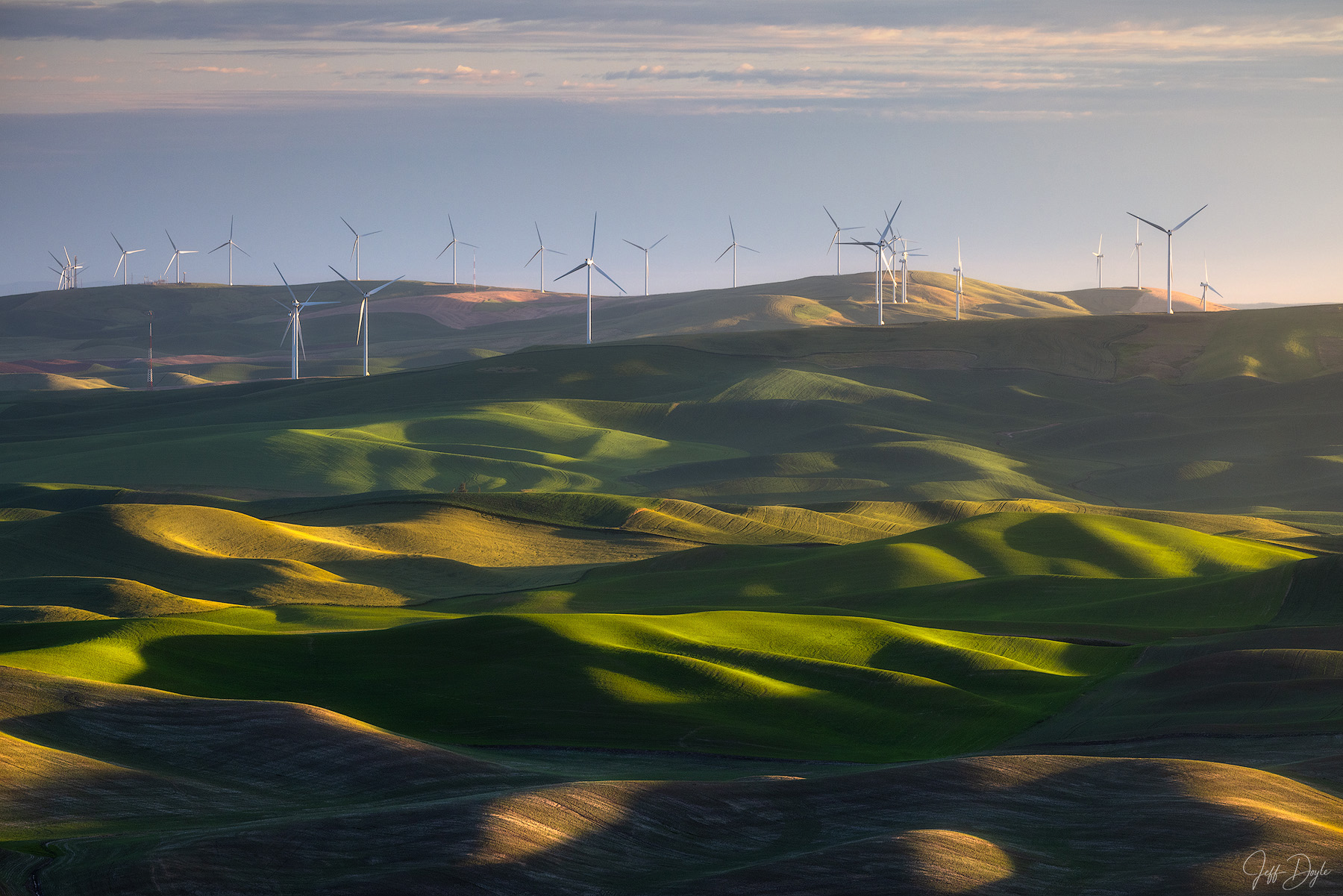
Grasslands and Agricultural Landscapes
Some of the most compelling landscapes are created by subtle repetition rather than towering features. Rolling hills, fields, crop lines, grasses, dirt roads, and changing light can produce patterns that become almost abstract when viewed from the right position.
The Palouse is a particularly good example. The shape of the land and agricultural use combine into a landscape that is simultaneously natural and cultural, which gives the region a visual character all its own.
See my Palouse & High Desert Photography Prints gallery for examples.
Winter Landscapes
Snow simplifies a landscape in ways that can be extremely useful photographically. It can cover distracting details, separate dark forms from light ones, soften textures, and completely change the visual relationship between familiar elements.
Ice, frozen water, bare trees, winter storms, and low seasonal light also give winter landscapes a character that is very different from the same place in summer. A familiar location can feel almost entirely new after a snowfall.
My Fine Art Winter Landscape Photography Prints gallery explores that transformation.
Night Landscapes
A landscape does not stop being a landscape when the sun goes down. When stars, the Milky Way, twilight, or other celestial light becomes an important part of the scene, we often describe the resulting work as astrophotography or night-sky photography.
The land remains critical to those images. A photograph of the Milky Way above a desert arch is not only a photograph of the sky. The relationship between Earth and sky is what gives the image its sense of place.
You can explore those photographs in my Fine Art Astrophotography & Milky Way Prints gallery.
Does a Landscape Have to Be Natural?
No. A landscape can contain obvious evidence of human activity and still function as a landscape, as long as the place itself remains one of the primary subjects.
A road winding through a canyon may strengthen the viewer's understanding of scale, while a barn within a field may become an important focal point without changing the photograph into architectural photography. A person standing beneath a huge mountain may also help communicate the immensity of the environment.
I don't think landscape photography becomes more legitimate simply because every trace of humanity has been excluded. What matters is what the photograph is trying to say about the place.
Landscape vs. Portrait: What Does “Landscape” Orientation Mean?
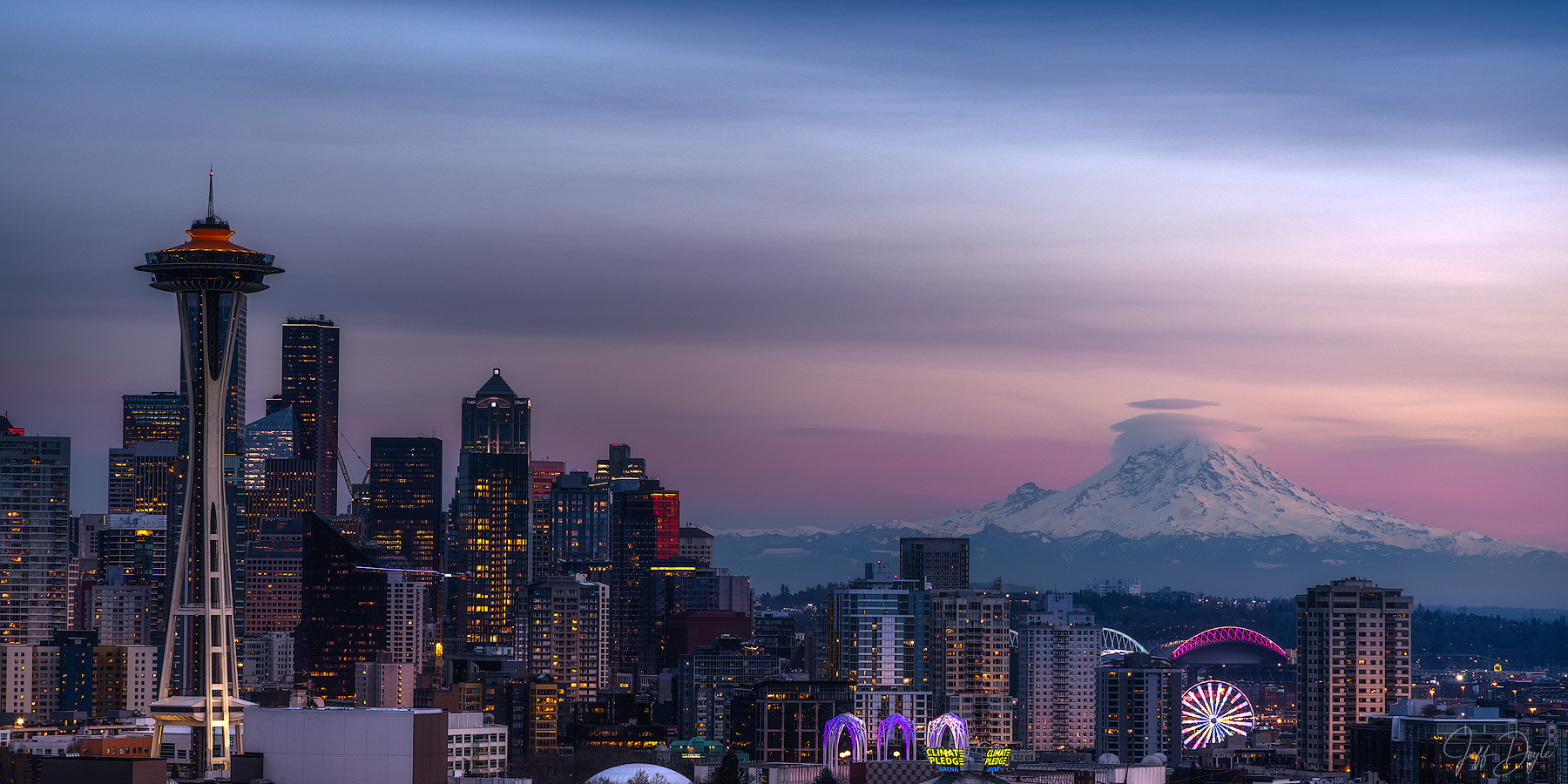
This is one of the most common sources of confusion around the word landscape. In photography and design, landscape orientation means the image is wider than it is tall, while portrait orientation means the image is taller than it is wide.
Those terms describe the shape of the frame, not necessarily the subject. A landscape photograph can be vertical, and a portrait can be horizontal.
Photographers choose orientation according to the composition in front of them. A tall waterfall, tree, canyon wall, or mountain peak may work beautifully as a vertical landscape photograph, while a wide valley may naturally suggest a horizontal composition. The orientation should serve the image rather than determine what category of photography it belongs to.
How a Photographer Sees a Landscape
A camera can point at a landscape almost instantly, but creating a meaningful landscape photograph usually takes longer. When I look at a scene, I am trying to understand the relationships inside it rather than simply recording everything in front of me.
Where does the eye naturally travel? What is competing for attention? Is there a strong foreground, are there useful layers, or are there shapes that echo one another? Sometimes moving only a few feet changes the relationship between two important elements enough to transform the entire composition.
Those questions often matter more than simply finding the grandest view. A photograph is a rectangle with boundaries, while the real world does not have those boundaries. Part of a photographer's job is deciding where those edges belong, which often means excluding far more than we include.
Light Can Change the Meaning of a Landscape
The physical landscape may remain almost unchanged while the photograph changes completely. Light can make a scene feel calm, threatening, luminous, mysterious, delicate, or immense.
Morning fog may reduce a complicated forest to a few simple layers, while side light can reveal texture across a desert formation. A break in storm clouds may illuminate one mountain while everything around it remains dark, and snow can reflect color from the sky in ways that are easy to miss until the conditions are right.
This is why landscape photographers often return to the same places repeatedly. The location may be familiar, but the combination of light, weather, atmosphere, and season never repeats in exactly the same way.
Weather Is Part of the Landscape
Some of my favorite conditions for landscape photography are not necessarily the conditions most people would choose for sightseeing. Clouds, fog, rain, snow, wind, and rapidly changing light can simplify a scene or add atmosphere.
A perfectly clear sky may reveal everything, but revealing everything does not always produce the strongest photograph. Sometimes what is hidden is just as important as what can be seen.
Fog can separate layers, clouds can direct light, storms can create drama, and fresh snow can completely reorganize the shapes within a scene. The landscape is not just the permanent geology beneath our feet. What happens in the atmosphere above it is part of our visual experience of that place.
A Landscape Photograph Is Not the Landscape Itself
This may be the most important distinction. A photograph is not a neutral copy of a place, but one person's interpretation of that place at one particular moment.
Change the photographer and the image changes. Change the light, move ten feet, wait an hour, or return six months later, and the photograph may look completely different even though the underlying landscape is still there.
The landscape exists independently of the photograph. Landscape photography is what happens when a photographer decides which small part of that enormous visual world deserves to become an image.
Why Landscapes Continue to Matter in Art
Landscapes connect us with places that may be familiar, distant, remembered, or completely unknown. They can show us something spectacular, but they can also make us notice things we might otherwise walk past.
A bend in a river, the shape of a ridge, a brief patch of light, the repeating curves of farmland, or a bank of fog moving through trees can become the entire reason for making a photograph. A photograph gives us time to look at those things differently.
That, to me, is one of the enduring strengths of landscape photography. It is not only about documenting where something is. It is about showing what it felt like to see it.
Frequently Asked Questions
What is the simple definition of a landscape?
A landscape is the visible character of an area, including features such as landforms, water, vegetation, weather, and human-made elements. The term can describe both natural places and environments that have been shaped by people.
What is landscape photography?
Landscape photography is photography in which a place, environment, or surrounding landscape is one of the primary subjects of the image. The goal may be documentary, artistic, personal, or commercial, but the character of the place remains central.
What is a landscape in art?
In art, a landscape is a representation or interpretation of a place or environment. Landscapes appear in painting, drawing, photography, printmaking, and many other artistic forms, with each medium offering a different way to interpret the scene.
What are examples of landscapes?
Examples include mountains, valleys, deserts, coastlines, forests, rivers, waterfalls, grasslands, agricultural areas, wetlands, and human-shaped cultural landscapes. Landscapes can be broad and expansive or small and intimate.
Does landscape photography have to show nature?
No. Landscape photography can include roads, buildings, farms, people, and other human elements when the character of the place remains central to the image. Human presence can sometimes add context or help communicate scale.
Can a landscape photograph be vertical?
Yes. Landscape photography describes the subject of the image, while landscape orientation describes a horizontal frame. A landscape photograph can be horizontal, vertical, square, or panoramic depending on the composition.
What is the difference between a landscape and a landform?
A landform is an individual physical feature such as a mountain, valley, canyon, dune, or plateau. A landscape is the larger visible environment created by the relationship between multiple features and elements.
What makes a good landscape photograph?
There is no single formula, but strong landscape photographs usually depend on deliberate composition, light, timing, atmosphere, visual relationships, and a clear idea of what the photographer wants the viewer to notice or feel. Technical skill matters, but seeing and interpreting the place matter just as much.
Is a city a landscape?
It can be. Urban and cultural landscapes are environments whose visible character has been strongly shaped by people. In photography, an urban scene may function as a landscape when the place itself is the primary subject.
Is landscape photography considered fine art?
Landscape photography can be documentary, commercial, editorial, personal, or fine art depending on the photographer's purpose and approach. Fine art landscape photography generally emphasizes the photographer's interpretation and artistic intent rather than simply recording a location.
Explore Fine Art Landscape Photography
Landscape photography begins with the place in front of the camera, but it does not end there. Light, weather, composition, timing, perspective, and personal interpretation all determine what eventually becomes the photograph.
If you would like to see how I approach those decisions in my own work, explore my Fine Art Landscape Photography Galleries, including mountains, deserts, waterfalls, coastlines, autumn color, winter scenes, wildflowers, and night landscapes.